

 GMA Brandtalk
 Tracking
 Archives

New rice varieties developed to survive drought using stronger roots
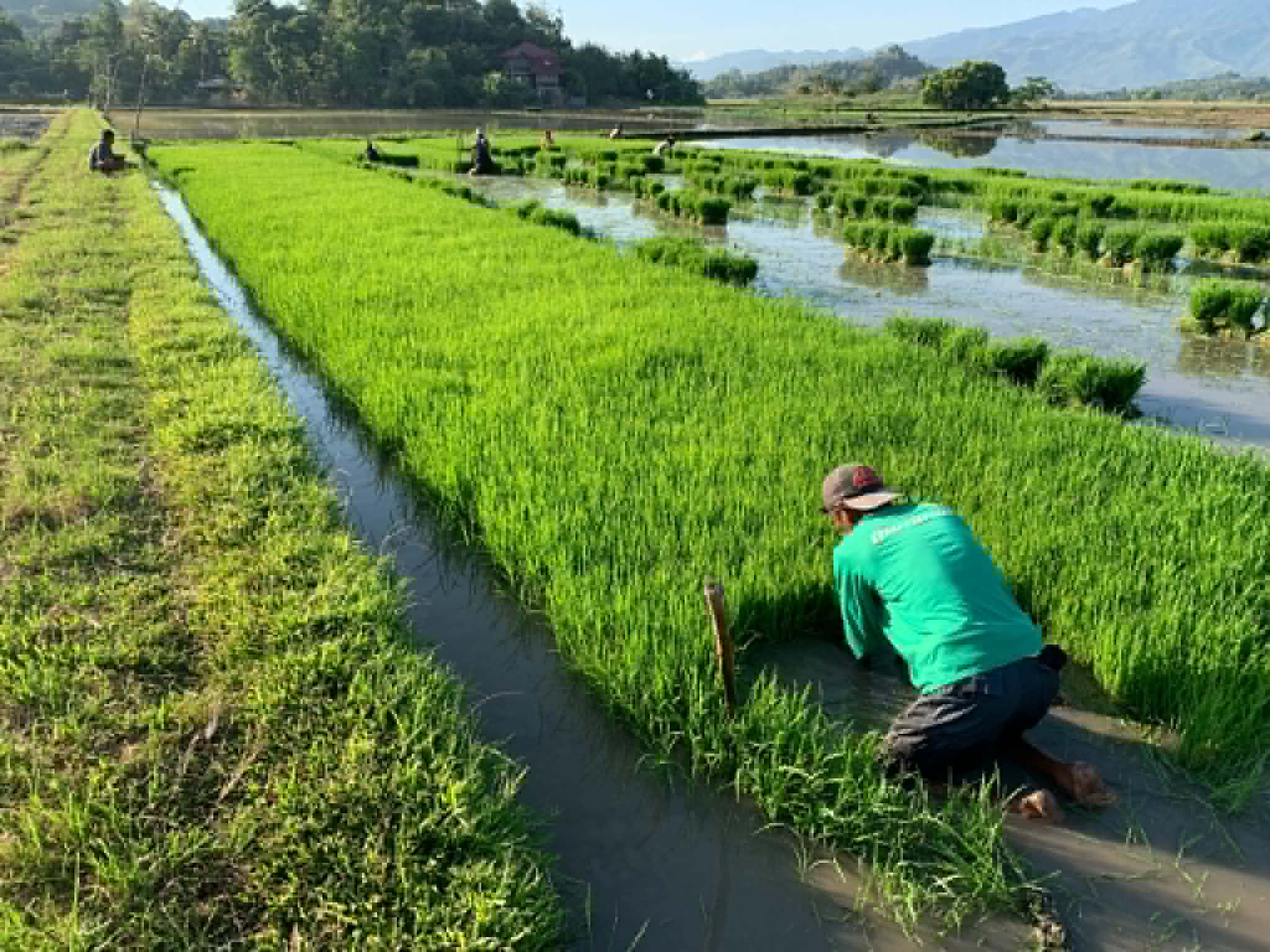
Three drought-resistant rice breeding lines with improved root systems have been developed to help address the impacts of climate change on the country’s rice production.
These lines were derived from a rice plant carrying a mutated weg1 gene, which was then crossbred with popular Philippine varieties such as Tubigan 14, Tubigan 36, and NSIC Rc 480.
The project, led by Roel Suralta and Department of Science and Technology (DOST) Balik Scientist Nonawin Lucob-Agustin, examined the L-type lateral root system and the associated weg1 gene to enhance drought tolerance in rice.
L-type roots develop thicker and longer lateral root structures, while the weg1 gene induces a wavy root growth pattern that promotes better branching and improved water uptake.
Lucob-Agustin said rice plants with an L-type root system driven by the mutated weg1 gene showed a 21% to 60% increase in root length while maintaining high branching and improved water uptake, as well as a 9% to 36% increase in yield under water-stressed conditions.
The researchers also found that genes responsible for plastic root development can be “switched on or off” through changes in histones—proteins that help package DNA.
They also identified a chromosomal region linked to the expression of the trait under rewatering conditions.
The study, funded by the DOST–Philippine Council for Agriculture, Aquatic and Natural Resources Research and Development (DOST-PCAARRD), is part of the project titled “Molecular Mechanisms of Root System Formation for Genetic Improvement of Rice Adapted to Water Stress Conditions.”
It is being implemented by the Crop Biotechnology Center of the Department of Agriculture at the Philippine Rice Research Institute Central Experiment Station.
Further field trials are underway to evaluate the breeding lines and assess how genetics, environment, and farming practices influence yield performance.
The Department of Agriculture earlier reported that more than P3 billion worth of crops nationwide have been damaged due to moisture stress, mostly in Luzon.
According to PAGASA, moisture stress occurs when crops receive insufficient water—usually due to low or delayed rainfall—hindering normal growth and development.
The state weather bureau earlier identified 15 areas in Luzon experiencing drought, a condition marked by significantly below-average rainfall over an extended period.
These areas are:
- Abra
- Apayao
- Benguet
- Ifugao
- Ilocos Norte
- Ilocos Sur
- Isabela
- Kalinga
- La Union
- Mountain Province
- Nueva Ecija
- Nueva Vizcaya
- Pangasinan
- Quirino
- Tarlac
The DA earlier said it is ramping up preparations for a possible severe El Niño later this year, warning that a prolonged dry spell could affect crop production, farmers’ incomes, and food prices.
To mitigate these impacts, Agriculture Secretary Francisco Tiu Laurel Jr. said the department has implemented measures including cloud seeding operations, deployment of solar-powered irrigation systems, adjustments to planting calendars to align with the Northeast Monsoon or Habagat, and crop diversification programs to help stabilize farmers’ earnings.—MCG, GMA News

