

 GMA Brandtalk
 Tracking
 Archives

For top Pinoy figure skaters, the price of a life on ice is everything
Michael Martinez glides smoothly across the ice, losing himself as he dances to classical music playing evenly from the invisible speakers. He jumps and spins in the air, then contorts his flexible body as he whirls rapidly in place like a tiny hurricane. He is always moving, always in transit.
He was born in tropical Philippines, but he trains in the United States and trots along to more than 20 cities in Europe and Asia for competitions. Just as he is on ice, he never stays still, never stays in one place for long.
This is the life of a figure skater. But beyond the bright lights and ever-changing scenery, there lies a life on hold, as though frozen in time.
Michael is turning 20 in November. In an alternate universe, he would have been in his senior year of college, finishing a degree or perhaps serving an internship. In truth, he has had to put any plans of going to college on hold, busy as he is chasing a dream larger than life.
"I wanted to apply to a college and then I postponed it," he says one Wednesday afternoon in a small room at the SM Megamall Skating Rink. "I just couldn't do it. I tried, but it's too hard."
He has just finished training, one of the countless session he has had to toil through in his bid to qualify for his third Olympics appearance. Two years ago, he made history as the first ever skater from the tropical zone to compete in the Winter Olympics. In 2012, he also participated in the Winter Youth Olympic Games.
Michael wants to win an Olympic gold medal, and he has sacrificed everything to accomplish the quest he has chosen for himself. Setting aside his childhood dream of becoming a lawyer someday, he has instead dedicated his youth to a life on ice.
He trains 10 hours a day - six hours of practice, two hours of workout and swimming, one hour of dance, and an hour of physical therapy. He rests a couple of hours in between so he has no more room for classes — or hardly anything else.
"I really have to focus on skating only and no other stuff," he says. "I don't play games, I don't do anything, just focus on what I needed to do."
It is something he has come to accept. He already skated among the best twice; he knows what it takes to reach the top.
For other aspiring Filipino skaters, it is a difficult path to follow. Only a handful can afford to pause their studies and concentrate on a sport that requires so much of their time. Many of those who once expressed interest in becoming the next Michael Martinez do not make it very far.
"There's a lot of skaters that are still in school," Michael says. "Others are in college na, so they have to choose e. College or skating? Kaya ang daming nawawalang skaters.
"You want to learn more or other stuff - art or something else - that you wanted to do, but you can't," he adds. "It's just really hard."
Sofia Guidote, 14, manages by enrolling in a home school program in the United States instead of attending regular classes. She attends one-on-one lessons at a tutorial center in the afternoons, sandwiched between her two-hour morning and evening practice sessions every day.
The arrangement makes it easier for her to join international competitions because she does not have to secure permission to be excused from school, but that does not mean she gets a lighter work load than everyone else.
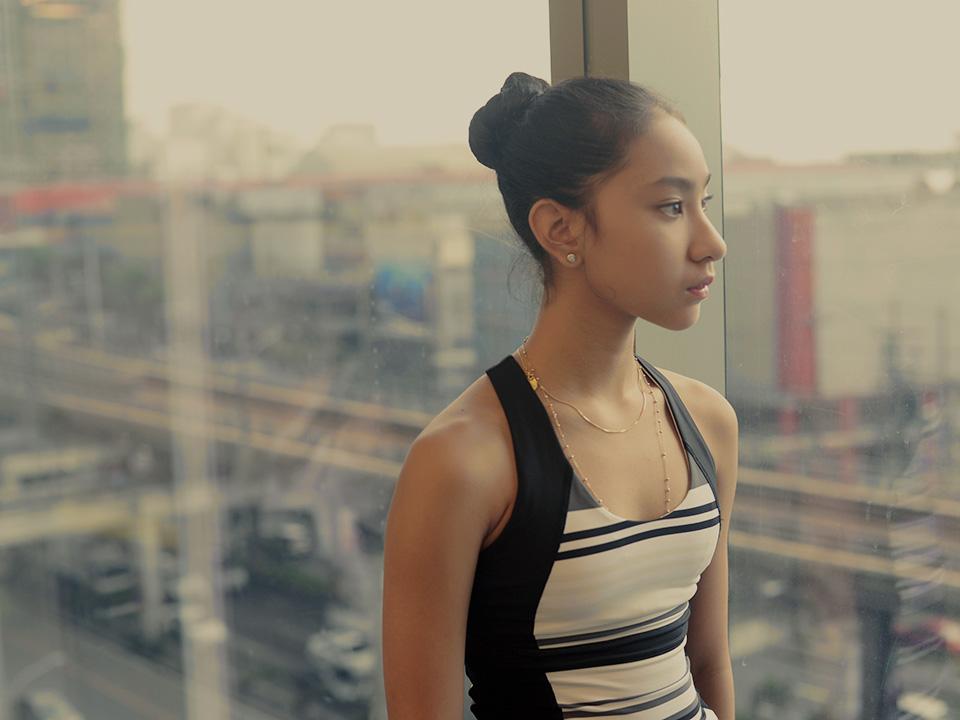
"I don't really hang out with my friends anymore 'cause usually at the end of the week I'm like tired," she says. "I just wanna stay at home."
For many skaters, social lives often have to be sacrificed. Misha Fabian, 18, admits it is hard for her to balance everything, because she is a sophomore college student pursuing a European Studies degree at Ateneo de Manila University.
Unlike Sofia, who is only is eighth grade, Misha has to juggle full load course work — attending classes, writing papers, fulfilling other requirements — along with her training. On Sundays, she sets aside some time to serve as a member of a youth group in church, leaving only Saturday as her occasional off day when there is no practice.
"I make it a point to meet with friends," she says. "Sometimes they come here [at the rink] to meet me. But then it's very short kasi I'm really pressed for time."
With the heavy demands of the sport, as well as the financial burden of hiring a coach and renting time on a rink, figure skating in the Philippines has not grown significantly despite the buzz created by Michael's Olympic stint.
"Kumukonti po kami every year," Misha says. "From the group of people na pumasok mag-skate the same time as I did, dalawa na lang kaming natira out of like 15."
Sofia began skating when she was five; Misha when she was 10. They are among the few who have managed to persevere long enough and reach a certain level of success. Sofia won the gold in the 2014 ASU Southeast Asian Figure Skating Trophy; Misha achieved the same in the 2015 Asian Junior Figure Skating Challenge.
Michael is exceptional in how he has embraced skating as a way of life. The ice has become his home, the biting cold as comforting as the familiarity of the town where he was born. Eating his meal on the plane and sleeping on a long haul flight has become just as routine as sleeping on his own bed and eating at the dinner table.
He admits it is quite tiring to hop from one flight to another as he travels to every corner of the world for training and competitions. But visiting places feeds into one of his hobbies and helps him cope.
"I really love photography and that's what makes traveling really fun for me," he says. "Every day training I go to Lake Forest, Anaheim, Artesia. I really love the scenery everywhere I go."
He owns a professional camera and two lenses, often taking pictures of nature and landscape views. He posts his photos on a stock-selling website for amateur photographers; American photo agency Getty Images has bought some of his shots.
He is active on social media, too, often sharing personal photos from his frequent trips in his Instagram, Twitter, and Facebook accounts. He has several pictures with the top skaters in the world: Yuzuru Hanyu, Patrick Chan, Denis Ten, Gracie Gold, Mao Asada, Yulia Lipnitskaya.
"It feels like a dream na dati pinapanood ko lang sila sa YouTube and then now I'm skating with them. I eat with them, I warm up with them," he says. "They told me we're all the same, we're all skaters. Kung saan kami ngayon, you can reach it."
Those are the same words that Sofia and Misha hold on to - they may have not met their idols yet, but Michael has proven that even athletes from a country that has never seen snow can compete on ice.
"He's really the inspiration kasi we see him, we came from the same place. If he can do it, maybe I can do it also," Misha says.
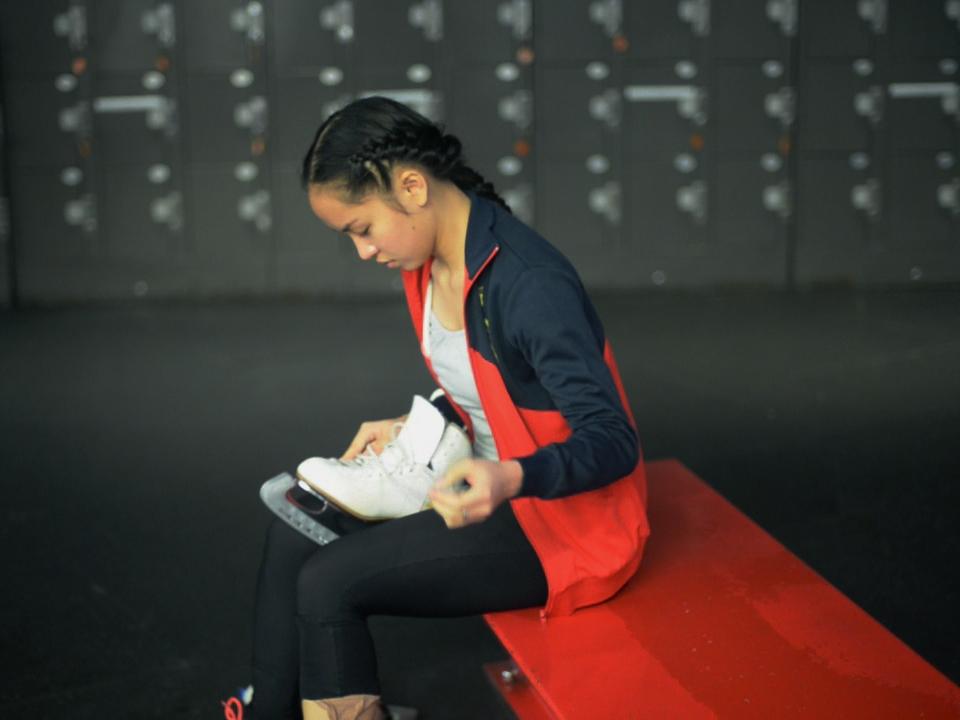
Sofia stayed up to watch Michael skate in the 2014 Winter Olympics in Sochi, Russia. She had trained with him in Switzerland so nothing in his performance could surprise her anymore. But Michael still blew her away during the parade at the opening ceremony.
"I got goosebumps when he walked during the opening. It's like, whoa, this is actually real, he really made it. There's the Philippine flag," she says.
Michael stood alone; he was the only Filipino athlete who competed in the Winter Olympics two years ago. But he proudly carried the flag for all the world to see, putting the country in the map of figure skating.
Later, as he sat in the kiss and cry booth waiting for the score of his short program performance, he also touched the hearts of many Filipinos when he displayed the back of his jacket to the camera, making sure that the viewers knew which country he came from.
"I was like, 'kala n'yo 'di namin kaya 'to a, we're tropical country. Philippines 'to, Philippines 'to," he says.
Michael, Sofia, and Misha all believe that the Philippines could be competitive in international figure skating. Even with only three rinks in the country, they have seen enough potential among leisure skaters to know that Filipinos belong on the ice.
"We can really focus on this sport. There's so many categories e, like single skating, pairs, dance. Ang dami so we have a lot of chances," Michael says.
He hopes that things can be done to make it easier for aspiring skaters in the country to follow his footsteps: providing training facilities, topnotch coaches, exposure in international competitions. So that when wide-eyed kids come across a skating rink inside a shopping mall, they can afford to dream of a life on ice, just like he did more than a decade ago.
"When I got home I drew a picture of me, and then the possible sponsors. I was in the Olympics," Michael remembers with a huge smile on his face. "I was really eyeing it already. I was like, this is really meant for me." —JST, GMA News

