

 GMA Brandtalk
 Tracking
 Archives

Study says SAP failed to give relief to poor, calls for more ambitious pandemic welfare plan
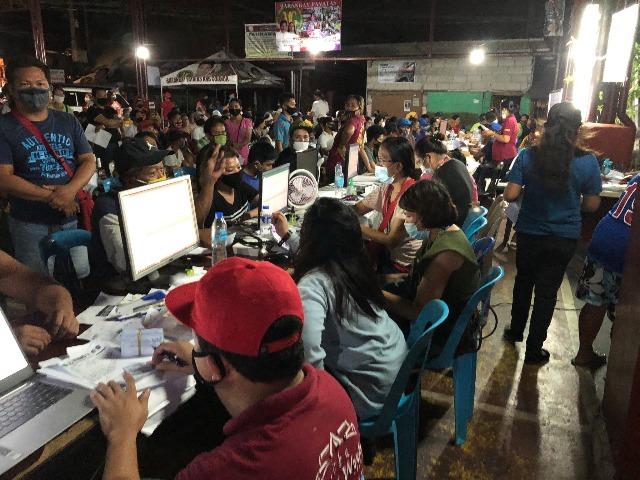
Vulnerable households across the country were given less assistance than what they are entitled to under the Social Amelioration Program (SAP) of the government, findings presented by Social Watch Philippines revealed.
In a report entitled Assessment of DSWD's Implementation of the Social Amelioration Program (SAP) authored by Duke Thomas Dolorical and shared to the media by Social Watch, last year's SAP was dubbed as a failure as it was not able to cover all intended beneficiaries.
"While SAP was touted as a social policy that would provide meaningful economic resources to low-income families disenfranchised by a two-month quarantined caused by the COVID-19 pandemic and, consequently, prevent them from falling into poverty, it has failed to achieve both." the report read
"It was clear that the attempt of the national government to target certain sectors of a largely impoverished population is not only residual but is also problematic," it added.
The first tranche of the DSWD's SAP targeted to provide cash assistance to 18 million low-income families across the country while the second tranche only covered 12 million household beneficiaries, which the DSWD said were due to deduplication efforts.
Social Watch Philippines said, however, that some households only received the first tranche of SAP funds even if they were entitled to receive more than one by virtue of having more than one member considered vulnerable.
"The urgency to provide SAP assistance at the soonest possible time during the strict lockdown period could have justified an expedited validation process," it said.
"The protracted validation process of beneficiaries delayed the SAP distribution. In the case of the distribution of the second tranche, the delay was about five months, which, in turn, further prolonged the agony of recipients," it added.
Dolorical's report said that the targeting of beneficiaries excluded multiple sectors equally in need of government assistance, such as persons with disabilities who were said to not have been included in the official lists of beneficiaries. Partisan local government officials also reportedly excluded some from the list due to political biases.
The study also found that a barangay in Manila City was forced not to distribute SAP in the community as only 200 of the total 400 households in the community were listed as beneficiaries which caused public uproar. The barangay captain decided against the release of assistance to maintain peace.
This comes even as the DSWD in November 2020 was questioned for some P83 billion unutilized funds under the 2019 and 2020 general appropriations acts.
"[T]here are lots of challenges; the COVID pandemic, ‘the restrictions, mobility," DSWD spokesperson Irene Dumlao said then in a mix of English and Filipino.
GMA News Online has reached out to Dumlao to comment on Dolorical's report, but no response has been received as of this posting.
Moving forward, Social Watch called on the administration to set up a more ambitious social protection program that will provide more aid to people affected by the pandemic.
"The continuing pandemic is a wake-up call for the government to strengthen its technical capacity and administrative competence in providing social protection schemes," said Social Watch Philippines Co-convenor Ma. Victoria Raquiza.
The group said there is a need for welfare schemes to cast wider nets to increase beneficiaries, not only in terms of providing for their daily needs but assisting them even after the pandemic.
The government has allocated some P23 billion to provide assistance to some 22.9 million beneficiaries in NCR Plus hit by the ECQ.
One year into the quarantines in the Philippines, the country continues to report over 9,000 fresh cases of COVID-19 daily. The health department on Tuesday reported 9,296 new confirmed cases of COVID-19, bringing the total to 741,181. This includes a record-high 124,680 active cases; 603,310 recoveries; and 13,191 deaths.
NCR Plus —Metro Manila, Cavite, Laguna, Rizal, and Bulacan —has been under ECQ from midnight March 29 and will last until Sunday, April 4, 2021. No guidance has been given what follows.
Prior to the announcement of the ECQ, the government banned the non-essential entry and exit into the NCR Plus bubble during the same period.—LDF, GMA News

