

 GMA Brandtalk
 Tracking
 Archives

How 5 SC associate justices voted against ruling that denied Bato Dela Rosa's TRO
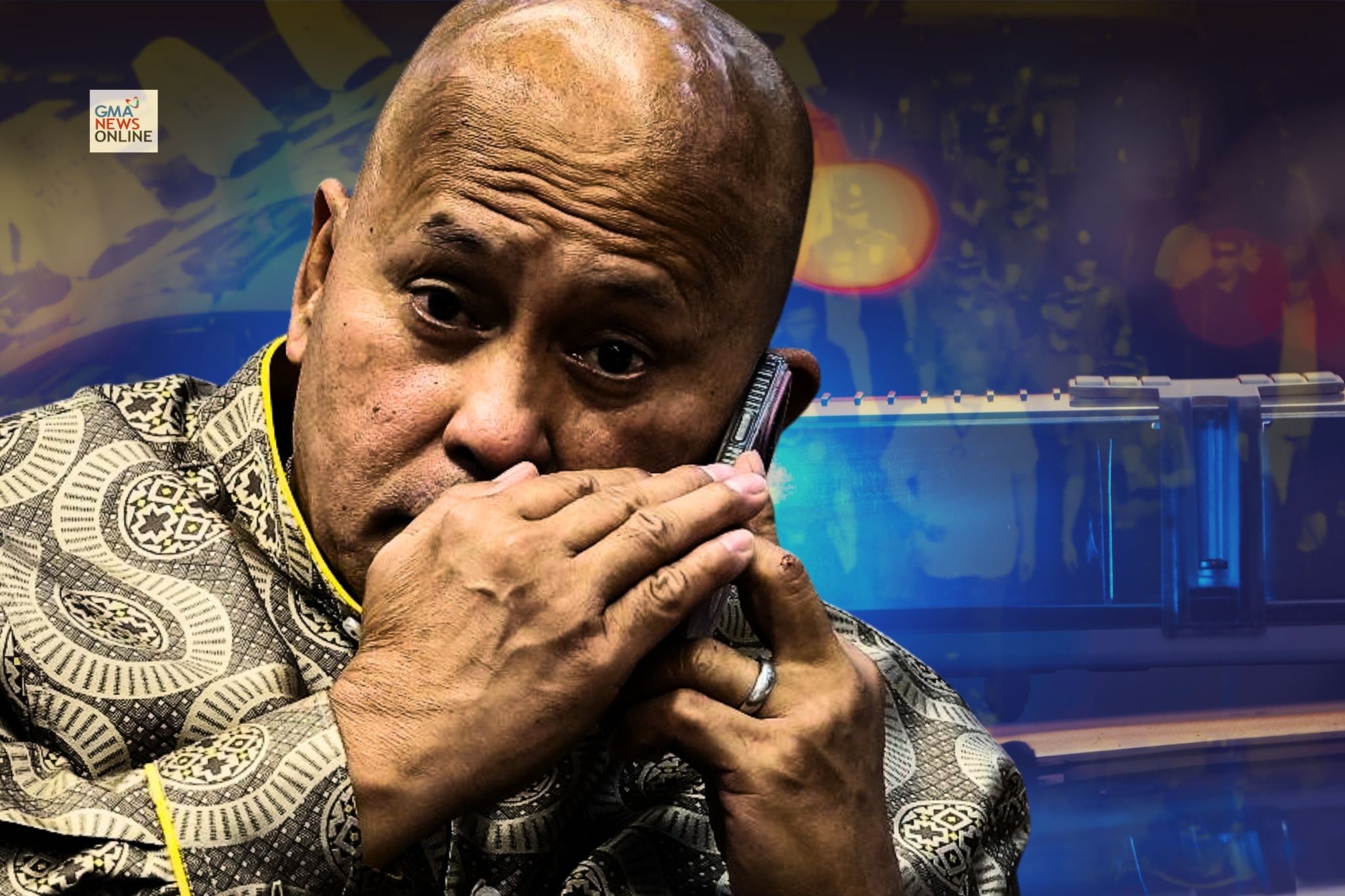
Five Supreme Court (SC) associate justices had dissenting opinions on the High Court’s denial of Senator Ronald “Bato” Dela Rosa’s request for a temporary restraining order (TRO) and/or status quo ante order (SQAO) in connection with his possible arrest based on the warrant issued by the International Criminal Court (ICC).
On May 20, the SC En Banc voted 9-5-1 during a special session to deny Dela Rosa’s prayer for interim relief.
The dissenting SC associate justices are Ramon Paul Hernando, Amy Lazaro-Javier, Henri Jean Paul Inting, Ricardo Rosario, and Antonio Kho Jr.
In their dissenting opinions, the associate justices explained their take on Dela Rosa’s petition and why they voted in favor of granting him a TRO or SQAO.
SC Associate Justice Ramon Paul Hernando
In his four-page dissenting opinion, Hernando said “there is no domestic judicial process authorizing the arrest or surrender” of Dela Rosa to the ICC and that the ICC has no jurisdiction over Dela Rosa’s case.
He said there is “zero guarantee” that once arrested, Dela Rosa will not be immediately surrendered to the ICC and brought to the Hague.
“Indeed, the injury cannot be repaired after the fact by any subsequent ruling. Hence, the necessity of an injunctive relief,” Hernando said.
He added that the ICC investigation into Dela Rosa’s role in the war on illegal drugs commenced only after the Philippines withdrew from the ICC, and that the ICC arrest warrant was issued after the withdrawal as well.
“Hence, its enforceability is also in question,” Hernando said.
He added that Section 17 of Republic Act 9851 or the “Philippine Act on Crimes Against International Humanitarian Law, Genocide, and Other Crimes Against Humanity,” upon which the senator’s arrest is anchored, is unconstitutional.
He said this provision is not “an unbridled handover as it must still operate within constitutional limits.”
“In any event, and even more fundamentally, cooperation with international tribunals must still be exercised in a manner that does not contravene the Bill of Rights and the statutory protections that implement them. Thus, assuming a surrender pathway is invoked, the State’s actions must remain consistent with the constitutional rights of the person surrendered,” Hernando said.
SC Associate Justice Amy Lazaro-Javier
In her nine-page dissenting opinion, Javier said the plea for temporary injunctive relief demands a “disciplined legal inquiry and not a referendum on personality, political identity, or public sentiment.”
She said the circumstances presented “not only justify but necessitate the issuance of temporary injunctive relief.”
“The rights at stake are neither speculative nor abstract. The potential injury is not merely political or reputational; it is juridical, concrete, and irreparable. To deny provisional relief under these conditions is to expose petitioner to harm that the law itself recognizes as intolerable,” she said.
As to Section 17 of RA 9851, Javier said this statutory authority in cooperating with international tribunals “cannot be invoked in a vacuum.”
“It cannot be implemented as though it exists apart from the Constitution. The statute must be read, understood, and applied with due regard for the procedural and substantive guarantees that the Constitution enshrines,” she said.
SC Associate Justice Henri Jean Paul Inting
“In my humble view, the issuance of a SQAO is warranted because the full implementation of the ICC warrant of arrest would render the present action moot,” Inting said in his three-page dissenting opinion.
He added: “To my mind, the issuance of a SQAO is not dependent on any right in esse that Senator Dela Rosa possesses. Rather, the SQAO may be issued for the Court to properly maintain its authority over the controversy and the reliefs that it could afford to the parties.”
Inting said the SQAO must be issued “purely to avoid a situation wherein the resolution of the case may be reduced to a paper judgment and would afford no real reliefs to the parties.”
SC Associate Justice Ricardo Rosario
Rosario, for his part, voted to grant a TRO in favor of Dela Rosa. He said the issuance of an ICC sealed warrant against an elected Philippine public official for crimes committed within Philippine territory stands on “questionable constitutional, statutory, and jurisdictional grounds.”
“While the ponente wisely tackles the petition from the technical point that petitioner Dela Rosa failed to show the requisites for the issuance of a TRO, we must also consider that if a TRO is not issued, a serious and imminent threat of arrest by the ICC – as implemented with the cooperation of our Executive Department – would exist with the resulting degradation of our sovereignty and abdication of our judicial power,” he said in his five-page dissenting opinion.
“This is not to say that petitioner Dela Rosa should not be held liable for the crimes imputed to him if he is proven guilty. However, until such time, petitioner Dela Rosa remains entitled to the full protection of the Constitution, our laws, and the jurisdiction of Philippine courts,” Rosario added.
SC Associate Justice Antonio Kho Jr.
In his 23-page dissenting opinion, Kho said Dela Rosa has fully established the confluence of all the elements for the issuance of a TRO and/or SQAO and that he is entitled to these reliefs.
He added that there is an “urgent need for the writ to prevent irreparable injury to Sen. Dela Rosa.”
“Once arrested and promptly surrendered to the ICC, Sen. Dela Rosa would hardly be left with any remedy under Philippine laws to secure his return to the Philippines should the present case be decided in his favor. Verily, should Sen. Dela Rosa be arrested and surrendered to the ICC, no amount of compensation or subsequent ruling by the Court would be sufficient to remedy the situation as Sen. Dela Rosa will be beyond the immediate and effective reach of Philippine judicial processes,” he said. — JMA, GMA News

