

 GMA Brandtalk
 Tracking
 Archives

SC associate justice: No need for PH-issued warrant for ICC cases
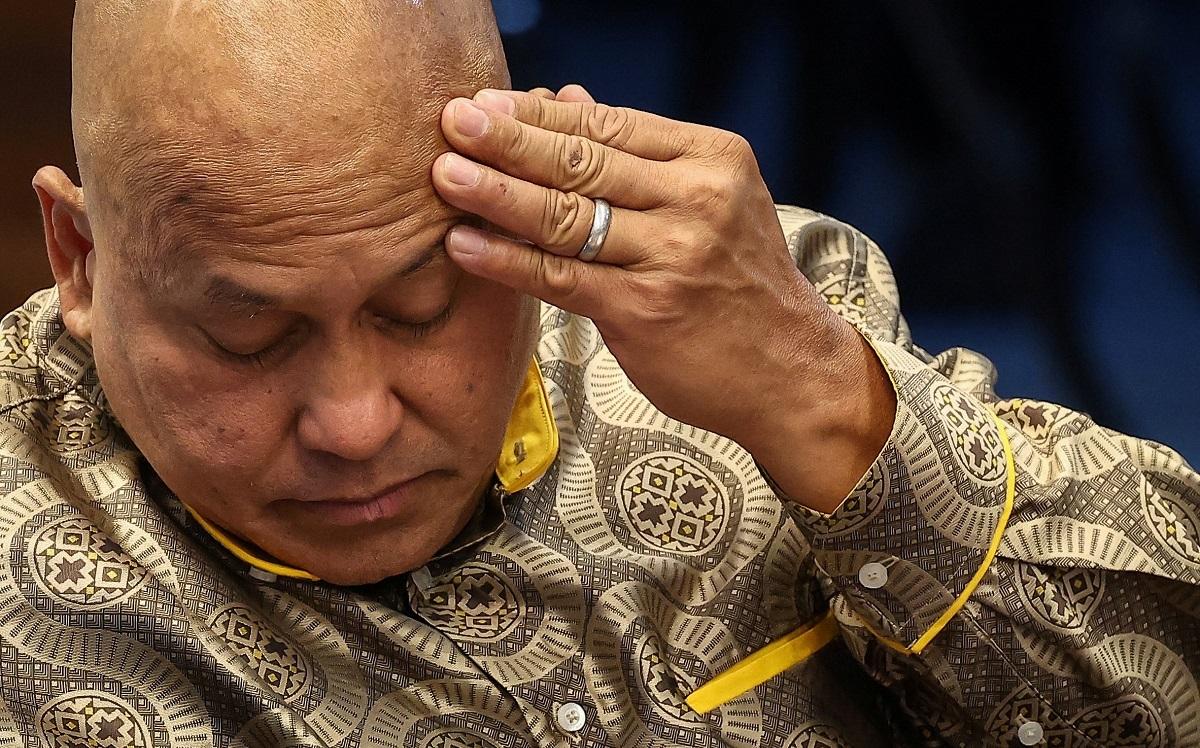
For Supreme Court (SC) Associate Justice Alfredo Benjamin Caguioa, there is no need for an arrest warrant from a Filipino judge in order to effect an arrest for cases under the jurisdiction of the International Criminal Court (ICC).
Caguioa said this in his 20-page concurring opinion in favor of the High Court’s denial of Senator Ronald “Bato” Dela Rosa’s request for a temporary restraining order (TRO) and/or status quo ante order (SQAO) in connection with his possible arrest based on the ICC arrest warrant.
On May 20, the SC En Banc voted 9-5-1 during a special session to deny Dela Rosa’s prayer for interim relief.
Caguioa was one of four SC associate justices who penned their respective concurring opinions agreing with the denial of interim relief to Dela Rosa.
The others are Senior Associate Justice Marvic Leonen and Associate Justice Rodil Zalameda, who wrote their separate concurring opinions; and Associate Justice Maria Filomena Singh, who had her own concurring opinion.
Caguioa noted Dela Rosa’s argument that an ICC arrest warrant is not self-executing within Philippine territory, since it was issued by an international tribunal and not a Filipino judge who independently determined probable cause as required by the 1987 Constitution.
He said the fault in this argument is in the premise “that it has to be a Philippine court or judge that issues a warrant.”
“That may be true from a purely domestic standpoint, but considering the developments in international law, it is unreasonable to interpret the requirement of a warrant in a very limited sense of being required to be issued by a Philippine court or judge,” he said.
Caguioa pointed out that the Philippines, in becoming a state-party to the Rome Statute that created the ICC, recognized that Philippine courts “may not supplant the ICC’s wisdom on whether the warrant was properly issued.”
“In instances of a warrant issued by the ICC, and assuming that a Philippine judge needs to separately issue a warrant in order to implement it, what will be the lens from which the Philippine judge should analyze the application? The eventual criminal case will not be cognizable by Philippine courts. It stands to reason, therefore, that probable cause determination is done by ICC judges alone, not Philippine judges,” he said.
Caguioa added: “In other words, it is clear that there is no need for a separate warrant from a Philippine judge in order to effectuate an arrest for cases cognizable by the ICC, not only because of the import of Article 59(4) of the Rome Statute, but also because logic dictates so.”
Senior Associate Justice Marvic Leonen
In his 15-page separate concurring opinion, Leonen noted that as a general rule, “our courts will not issue writs of injunction or prohibition to restrain a criminal prosecution.”
“The legality of the State’s action is tested after it is invoked in the proceeding it sets in motion, and is not pre-empted before it begins. The exceptions are narrow and well defined, and the rule’s purpose is to keep the judiciary from arrogating to itself, through provisional remedies, a general superintendence over the timing and manner of law enforcement,” he said.
Leonen added that Dela Rosa “will have judicial remedies if he is arrested.”
“For instance, and at a minimum, a writ of habeas corpus will require that he be brought before this Court,” he said.
The parties can also exhaust their arguments on critical issues of interpretation in Republic Act 9851 or the “Philippine Act on Crimes Against International Humanitarian Law, Genocide, and Other Crimes Against Humanity,” the application as a matter of jurisdiction or admissibility based on residual obligations to the Rome Statute, the process of arrest and seizure both under the 1987 Constitution, and whether he can be surrendered or extradited to the ICC, Leonen added.
SC Associate Justice Rodil Zalameda
For Zalameda, Dela Rosa “failed to establish a clear and unmistakable right warranting the extraordinary intervention of this Court through interim equitable relief.”
He said the SC “cannot exercise its equity jurisdiction as there is an express provision under a domestic law that allows for the surrender” of Dela Rosa to the ICC, referring to RA 9851.
“It is improper to issue an SQAO because of the foreign relations aspect of this case. This Court has consistently recognized that matters affecting foreign relations and international cooperation substantially implicate the constitutional prerogatives of the executive branch, particularly the president as the chief architect of our foreign policy,” Zalameda said in his nine-page concurring opinion.
Like Leonen, Zalameda pointed to remedies that Dela Rosa may avail.
He said the senator may “invoke supervening events or matters overlooked by the Court to seek reconsideration of the present denial of interim relief pursuant to the Rules of Court and the Internal Rules of the Supreme Court.”
Dela Rosa may also pursue adjudication on the merits of the constitutional and legal questions raised in his petition.
“Remedies before the ICC are also available to Sen. Dela Rosa. As a person for whom a warrant of arrest has been issued under Article 58 of the Rome Statute, Sen. Dela Rosa may challenge the jurisdiction of the ICC or the admissibility of the case,” Zalameda said, adding that Dela Rosa may also seek interim release or other provisional liberty measures before the ICC if he is surrendered to the international tribunal.
SC Associate Justice Maria Filomena Singh
Meanwhile, Singh said Dela Rosa “failed to establish an urgent and paramount necessity for the issuance of any injunctive writ.”
“If anything, the recent events highlighted that Senator Dela Rosa does as he sees fit, as he wants, and at will. The alleged imminent enforcement of the ICC warrant against Senator Dela Rosa did not give rise to an extremely urgent situation necessitating this Court’s intervention,” she said in her 10-page concurring opinion.
Although the senator is correct in saying that the ICC arrest warrant is not a Philippine warrant, Singh said his point is “incomplete.”
“An ICC warrant is not a Philippine warrant for purposes of initiating a domestic criminal prosecution. It is, however, a juridical act issued within an international criminal proceeding that may trigger domestic cooperation under Philippine law. The consequence is not that Philippine officers may arrest without legal authority. Rather, the consequence is that the lawfulness of arrest and surrender must be tested by the applicable domestic and international frameworks, not by mechanically transplanting the requirements of Rule 1 l 2 and Rule 126, which govern ordinary domestic criminal prosecutions,” she said.
Singh pointed out that the ICC “is not a foreign police officer trespassing into Philippine territory.”
“It is an international criminal tribunal created by treaty, operating through State cooperation, and directed toward the prosecution of genocide, war crimes, crimes against humanity, and aggression. Its processes are not ordinary foreign warrants issued by the municipal court of another State. Nor are they ordinary Philippine criminal complaints that require a domestic preliminary investigation and a Philippine trial before custody may be recognized for surrender purposes,” she said.
Moreover, Dela Rosa’s actions prior to seeking relief before the High Court were “tainted with bad faith,” given that he evaded legal processes for six months and only returned to the Senate not to face law enforcement, but to vote in a leadership election.
“This conduct shows that Senator Dela Rosa only engaged with the legal processes based on his convenience, and reflects inequitable conduct which should bar the grant of the reliefs he seeks,” she said.
Singh stressed that the main issue in the petition is accountability, especially moral accountability and the burden of public office and the “crucible of public answerability.”
“No public official can wear the oath of office as an armor against liability. As the mandated guardian of the rule of law in our constitutional order, the Supreme Court must exact that responsibility. To do any less would be to shirk that solemn duty and be complicit,” she said. — JMA, GMA News

