

 GMA Brandtalk
 Tracking
 Archives

EXPLAINER: What is BP 880, the law governing rallies in the Philippines?
The only law regulating public assembly in the Philippines is Batas Pambansa (BP) 880 or the Public Assembly Act of 1985, according to National Union of People's Lawyers (NUPL) president Ephraim Cortez.
"Yes. [BP 880 is] the only law regulating the holding of public assembly," he said.
"But there is also a felony of illegal assembly under Article 146 of the Revised Penal Code involving rallies attended by armed groups for the purpose of committing a crime, or rallies intended to incite sedition, rebellion," he added.
Section 3 of BP 880 describes public assembly as any rally, demonstration, march, parade, or any other form of mass concerted action in a public place for the purpose of presenting a lawful cause, expressing an opinion, or protesting or influencing any state of affairs.
As provided by Section 4, a written permit is required to organize and hold a public assembly in a public place.
No permit shall be required if the assembly will be held in a freedom park, a private property, or in the campus of a government-owned and operated educational institutions, which shall be subject to the rules and regulations of said institution.
Meanwhile, under Section 8, the leaders and organizers of the assembly have the duty to take all measures for the assembly to be conducted in a peaceful manner.
The law states that organizers must ensure the following, among other steps:
- inform the participants of their responsibility under the permit
- police the ranks of the demonstrators in order prevent non-demonstrators from disrupting the lawful activities of the public assembly
- confer with local government officials concerned and law enforcers to the end that the public assembly may be held peacefully
- see to it that the public assembly undertaken shall not go beyond the time stated in the permit
- take positive steps that demonstrators do not molest any person or do any act unduly interfering with the rights of other persons not participating in the public assembly
Meanwhile, the act also states that law enforcement personnel shall not interfere with the public assembly. However, a contingent may be stationed at least 100 meters away from the area of activity to maintain peace and order.
The act further stated that no public assembly with a permit shall be dispersed.
However, the police may disperse a public assembly when it becomes violent.
It stated at the first sign of violence, a ranking officer shall call the attention of the organizers and ask them to prevent the possible disturbance.
Should harmful objects be thrown at the police or non-participants, the law enforcement must audibly warn the participants that should such disturbance persist, the assembly will be dispersed.
The act, meanwhile, states that police should not arrest any leader, organizer, or participant during the public assembly unless he or she violates a law, statute, ordinance, or any provision of the act.
Under Section 12, a public assembly without a permit may be peacefully dispersed.
Prohibited acts
Meanwhile, Section 13 contains actions that shall constitute a violation of the act.
This includes the holding of any public assembly without a permit or the use of such permit in any place other than what is stated in the permit.
"Provided, however, that no person can be punished or held criminally liable for participating in or attending an otherwise peaceful assembly," it said.
Other prohibited acts include the unjustified denial or modification of a permit by the mayor or any official acting on his or her behalf; the refusal to acknowledge the application of a permit; obstructing or disrupting the right to peaceful assembly; the unnecessary firing of firearms, among others.
Meanwhile, the following actions violate the act if they are committed within 100 meters from the area of activity:
- carrying of a deadly or offensive weapon or device such as firearm, pillbox, bomb, and the like
- carrying of a bladed weapon and the like
- malicious burning of any object in the streets or thoroughfares
- carrying of firearms by members of the law enforcement unit
- interfering with or intentionally disturbing the holding of a public assembly by the use of a motor vehicle, its horns and loud sound systems
The penalties under the law range from one month to up to six years, depending on the violation.
EXPLAINER: What is a freedom park?
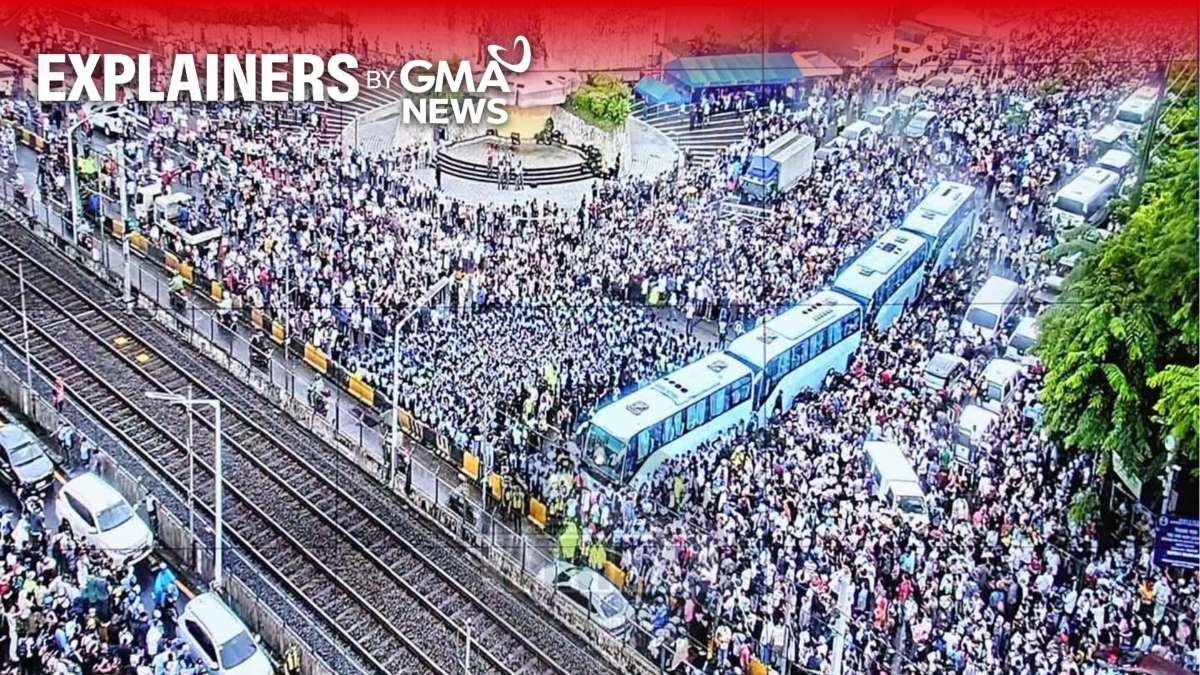
On Tuesday, protesters gathered along the EDSA People Power Monument in Quezon City, while a separate rally was held at Liwasang Bonifacio in Manila.
The Metropolitan Manila Development Authority (MMDA) had said the rally along EDSA had no permit. The Quezon City government later granted the INC's request for a permit to rally along the stretch of White Plains Avenue to Temple Drive for the next day, July 1.
Cortez, however, said that the NUPL believes that the exercise of the right to peaceful assembly should not be restrained based on the absence of a permit.
"Absence of a permit alone is not a valid ground to restrict or prevent the exercise of the right, or to disperse a peaceful rally," he said.
"As consistently ruled by the Supreme Court, the right to free expression, including the right to peaceful assembly, may only be curtailed by clear and present danger. In the absence of a clear and present danger, there is no legal basis for the police to prohibit or disperse it," he added.
Despite this, Cortez stressed that the INC protesters were treated with "kid gloves" compared to protesters in rallies held by Bayan and other progressive groups.
"Their rallies are usually blocked by a phalanx of riot police reinforced by armed policemen, and the police use devices and schemes to disrupt the rallies, i.e., blaring loud music," he said.
"They are constantly threatened with dispersal, and their leaders are criminally charged, as the PNP did to BAYAN's Renato Reyes and Raymond Palatino, KMU's Jerome Adonis, and PISTON’s Modesto Floranda, who are now facing charges for violation of BP 880," he added.
Cortez said that there should be no preferential treatment.
Amid the EDSA rally on Tuesday noon, the Department of the Interior and Local Government (DILG) said it directed the Philippine National Police (PNP) to exercise "maximum tolerance" to ensure that the activity remains peaceful, orderly, and safe.
The Quezon City government declined to extend the rally permit for the Iglesia Ni Cristo at the EDSA-White Plains area, citing inconveniences caused to the public as thousands came in late for school and work.
The Iglesia Ni Cristo on Thursday held Day 3 of its rally at the Liwasang Bonifacio in a Manila City—a freedom park, which does not require a permit to stage a program there. — VDV, GMA News

