

 GMA Brandtalk
 Tracking
 Archives

PHIVOLCS: Magmatic unrest, Alert Level 3 at Kanlaon possible if 'banaag' persists
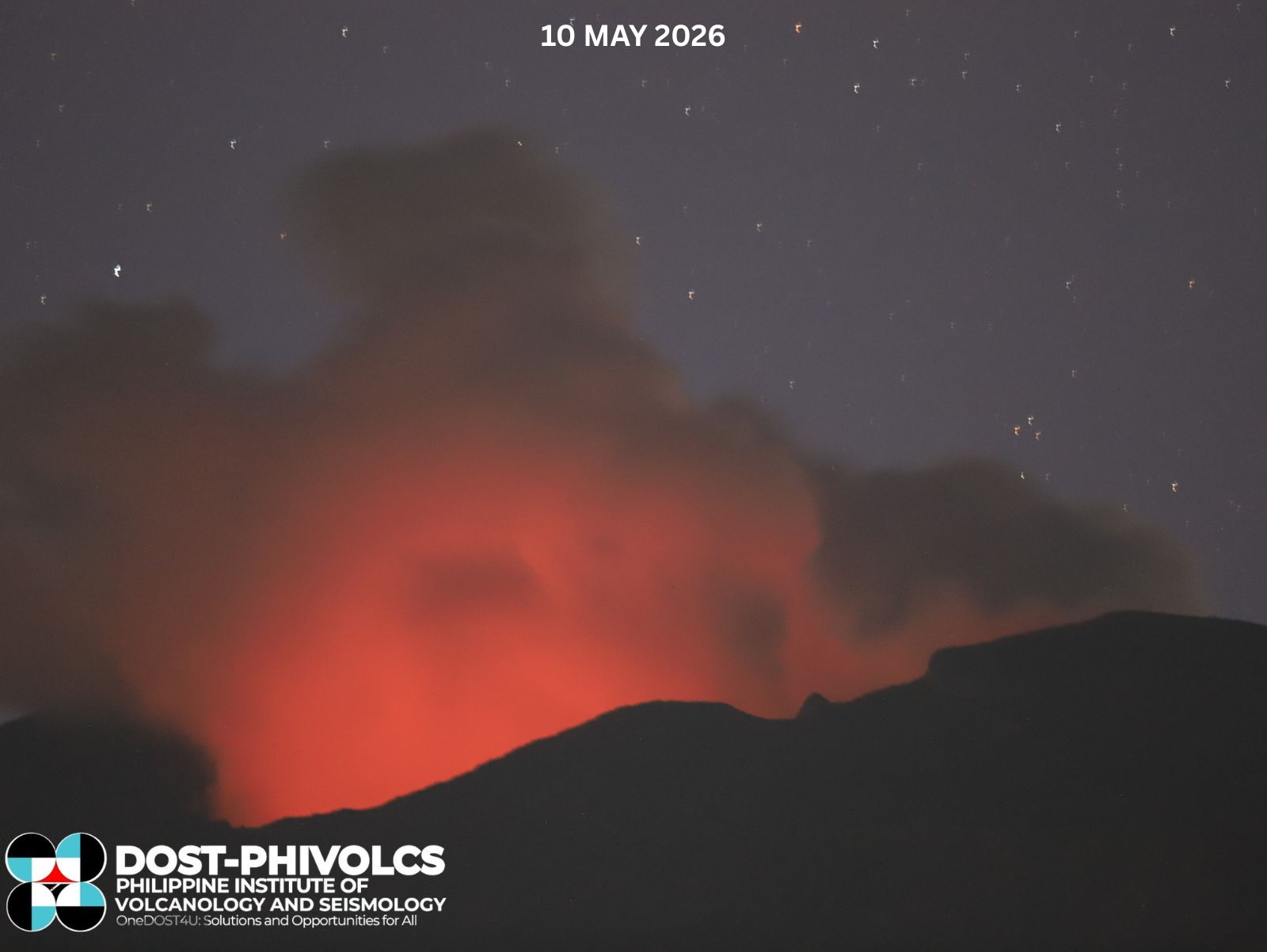
There may be increased chances of magmatic unrest “within days” and an elevated alert status at Kanlaon Volcano if its crater glow – or the visible superheated volcanic gas plumes – persists and intensifies, the Philippine Institute of Volcanology and Seismology (PHIVOLCS) warned on Monday.
In an advisory posted at 1:30 a.m. of May 11, PHIVOLCS noted that invisible emissions of superheated volcanic gas plumes from the volcano’s summit crater were occasionally detected at nighttime through infra-red and high-resolution camera monitoring since November 4, 2024.
At around 7 p.m. of Sunday, May 10, the Kanlaon Volcano Observatory (KVO) “reported observing with the naked eye for the first time incandescence at the Kanlaon Volcano summit caused by superheated volcanic gas, followed by netizen reports of the same observations.”
This phenomenon is called crater glow or “banaag,” which state volcanologists said is a “common precursor of magmatic eruption at Mayon Volcano.”
“While this is a new development, monitoring parameters have persisted in approximately the same level after Kanlaon’s last moderately explosive eruption on 15 March 2026,” PHIVOLCS said. Kanlaon Volcano had three moderately explosive eruptions in the first quarter of 2026.
It added that “seismicity remained at the steady rate of six (6) volcano-tectonic earthquakes/day, while sulfur dioxide (SO2) gas emissions based on campaign mDOAS measurements averaged 1,646 tonnes/day and have increased only slightly to 2,382 tonnes/day this past week.”
PHIVOLCS said ground deformation parameters “have been non-steady but still indicate a sustained and slow-rate inflation of the volcano edifice since 2022.”
“Nonetheless, if crater glow becomes sustained and intensifies, this would indicate that magma is close to or at the crater and could warn of increasing chances of magmatic unrest within days,” it warned.
It added that although Alert Level 2 prevails over Kanlaon Volcano, “the alert status may step up to Alert Level 3 should magmatic eruption be forewarned by sustained and intensifying crater glow or banaag at the summit crater.”
Alert Level 2 means a moderate level of volcanic unrest while Alert Level 3 refers to a high level of unrest.
On Sunday night, state volcanologists shared close-up photos of the visible superheated volcanic gas at Kanlaon Volcano’s crater.
PHIVOLCS stressed that magmatic eruption “would generate life-threatening volcanic hazards such of pyroclastic density currents or PDCs, lava flows, ballistic projectiles, ashfall, rockfall and others.”
The agency strongly recommended that communities within the four-km radius Permanent Danger Zone (PDZ) “strictly remain evacuated.”
“Those within the PDC Hazard Zones be vigilant and ready for evacuation in case the chances of magmatic eruption increase,” it said.
PHIVOLCS also advised local government units (LGUs) and disaster risk reduction (DRR) partners to ready their response measures and pay special attention to the elderly, those with medical conditions, expecting mothers and infants.
“In addition, increased vigilance against potential syn-eruption lahars and sediment-laden streamflow in channels draining the edifice is strongly advised should intense rains occur during eruptive unrest,” it said.
“Civil aviation authorities must also advise pilots to avoid flying close to the volcano’s summit as ash from any sudden eruption can be hazardous to aircraft,” PHIVOLCS added. — JMA, GMA News

