

 GMA Brandtalk
 Tracking
 Archives

Mayon Volcano lava flow extends —PHIVOLCS
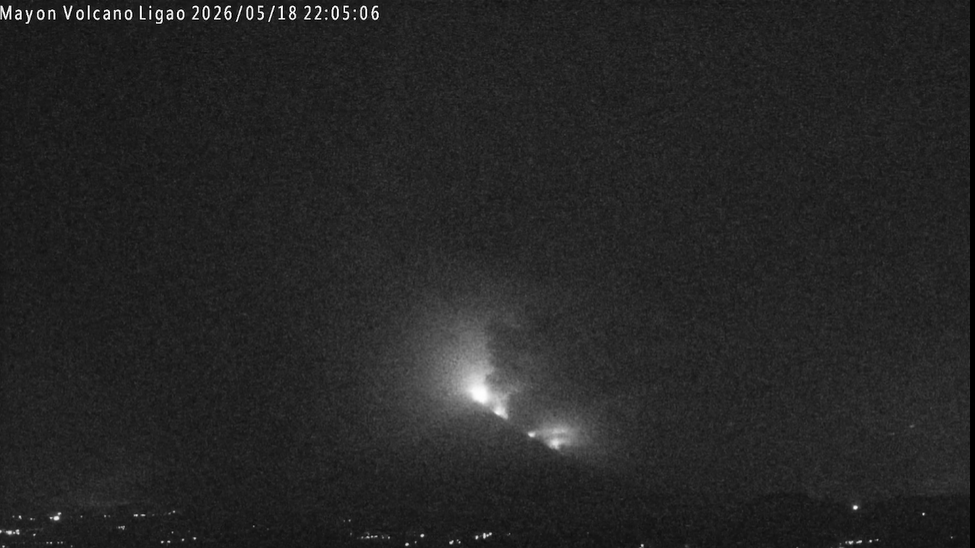
Lava flow from Mayon Volcano has extended further in one of its gullies, according to the Philippine Institute of Volcanology and Seismology (PHIVOLCS) bulletin on Tuesday.
The lava flow in the Mi-isi gully extended from 1.6 kilometers on Monday to 1.7 km on Tuesday.
Meanwhile, the lava flows in Basud and Bonga gullies remained at 3.8 km and 3.2 km, respectively.
PHIVOLCS said the daily pyroclastic density current (PDC) signals or uson increased from nine to 14.
Also, the daily volcanic earthquakes in Mayon Volcano increased from 20 to 31, lasting up to 83 minutes.
A total of 287 rockfall events were reported. This is lower compared to the 428 rockfalls recorded in the previous report.
PHIVOLCS still observed short-term deflation of the edifice with shorter-term inflation on the northeastern flank.
On Monday, 957 tonnes of sulfur dioxide emission was recorded from Mayon Volcano, lower than the 1,771 tonnes in the previous report.
The crater glow was described as fair and visible to the naked eye.
Mayon also emitted a weak plume that rose 1,300 meters above the crater before drifting south and southwest.
Alert Level 3 is maintained over Mayon Volcano, which means there is an intensified unrest or magmatic unrest.
PHIVOLCS reminded the public that entry into the six-kilometer radius permanent danger zone remains strictly prohibited due to persistent hazards.
The agency also warned against flying aircraft close to the volcano.
Possible dangers include rockfalls, landslides, ballistic fragments, lava flows, lava fountaining, pyroclastic density currents, and moderate-sized explosions.
Lahars may also occur during periods of heavy and prolonged rainfall. —Joviland Rita/KG, GMA News

