

 GMA Brandtalk
 Tracking
 Archives

LOOK: Mayon Volcano lava flow seen anew
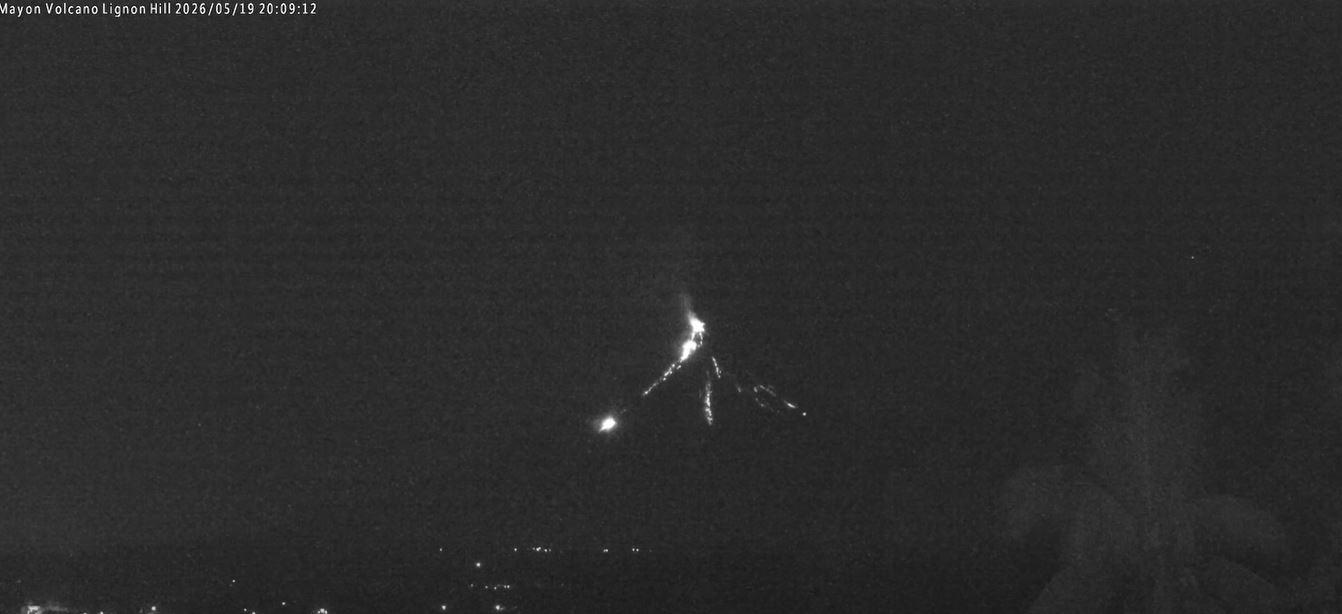
Mayon Volcano in Albay continued its activity on Tuesday, as the Philippine Institute of Volcanology and Seismology (PHIVOLCS) reported 134 consecutive days of lava effusion, pyroclastic density currents or “uson,” and rockfalls.
PHIVOLCS recorded the lava effusion "with collapse-fed pyroclastic density currents along Bonga and Mi-isi gullies" at 8:07 on May 19, 2026.
In its 24-hour observation bulletin released Wednesday, PHIVOLCS said the volcano generated 26 volcanic earthquakes, including 15 volcanic tremors, that lasted up to 80 minutes.
A total of 326 rockfall events and three pyroclastic density current (PDC) signals or uson were monitored.
The crater glow was “fair” when observed with the naked eye.
Mayon Volcano emitted 658 tonnes of sulfur dioxide gas on Tuesday.
Weak emission plumes rose as high as 400 meters above the crater before drifting southwest and west-southwest.
A short-term deflation of the volcanic edifice with shorter-term inflation was observed on the northeastern flank of the volcano.
Alert Level 3 prevails over Mayon and entry into the six-kilometer Permanent Danger Zone must be prohibited, PHIVOLCS added.
The agency warned against flying aircraft close to the volcano.
Possible dangers include rockfalls, landslides, ballistic fragments, lava flows, lava fountaining, pyroclastic density currents, and moderate-sized explosions.
Lahar may also occur during periods of heavy and prolonged rainfall, according to PHIVOLCS. —with a report from Joviland Rita/LDF/AOL, GMA News

