

 GMA Brandtalk
 Tracking
 Archives

PAGASA: 2 more typhoons expected in August 2026
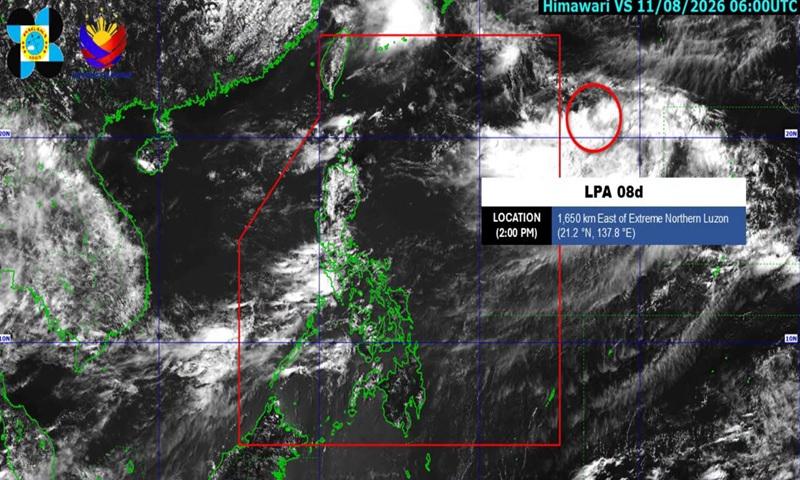
Following the onslaught of tropical cyclones Luis and Maymay, two more typhoons are expected to affect the country this August, the state weather bureau PAGASA said Tuesday.
“We are expecting four bagyos for this month. So nakakadalawa na po tayo,” PAGASA Senior Weather Specialist and Hydrologist Rosalie Pagulayan said in an interview on Bagong Pilipinas Ngayon.
(We are expecting four typhoons this month of August. We have already experienced two so far.)
To illustrate the intensity of the rainfall over the past week, PAGASA reported that its Baguio monitoring station recorded a total of 1,500 mm of rainfall. This significantly exceeds the region's normal average rainfall for August, which sits at just 963.2 mm.
PAGASA noted that moderate to heavy rainfall began on August 5, though light rains had already been affecting the area prior to that date.
According to Pagulayan, authorities are not ruling out the persistence of heavy downpour in the coming days, given that it is currently the peak of the rainy season alongside the presence of El Niño.
“Hindi po natin niru-rule out ‘yung possibility kasi isa pong epekto kapag meron tayong El Niño ay maaari tayong makaranas ng mga extreme rainfall events and even yung atin pong bagyo ay maaari pong malalakas din,” Pagulayan said.
(We are not ruling out that possibility because one effect of El Niño is that we can experience extreme rainfall events, and incoming typhoons may also be stronger.)
“Pero andiyan po talaga ‘yan, like for this month, ito po ay panahon tag-ulan, panahon ng tag-bagyo,” she added.
(But it is expected for this time of year, as this is traditionally our rainy and typhoon season.)
She further clarified that despite the presence of El Niño, normal seasonal weather systems—including the Southwest Monsoon (Habagat) and active typhoons—will continue to occur. The main variable affected by El Niño will be the overall intensity of the rainfall and tropical cyclones.
Water reservoirs
In previous weeks, residents and authorities expressed concern over a significant drop in Angat Dam's water level, which hit an all-time low in July and breached its critical threshold.
However, following continuous heavy rains, Pagulayan reported that Angat Dam’s water level recovered to 175 meters as of 12 p.m. on Tuesday.
“From its lowest elevation na naitala po noong July 26 hanggang ngayon po, August 11, nakapagtala na po siya ng almost 24.38 meters na pagtaas po from its lowest elevation,” Pagulayan said.
(From its lowest elevation recorded on July 26 up to today, August 11, the water level has risen by almost 24.38 meters.)
“... as of 12 p.m., ay nasa 175 [meters] na po siya,” she added.
(As of 12 p.m., Angat Dam water level sits at 175 meters.)
Due to heavy volume across water reservoirs, Ambuklao Dam was forced to discharge water, which cascades downstream into Binga Dam and finally into San Roque Dam.
According to Pagulayan, before absorbing the spilled water, San Roque Dam was also at a low level of 226 meters. Due to continuous rainfall and discharges from upstream dams, its elevation rose to 260.34 meters.
“Ine-expect po natin na tataas pa ito dahil meron pa pong bukas na gate… Kaninang alas-otso po base sa datos na hawak ko, meron pa pong bukas na dalawang gates ang Ambuklao at ang Binga rin po ay meron po siyang dalawang gates,” Pagulayan said.
(We expect this level to rise further because discharge gates remain open. As of 8 a.m., based on available data, two gates were open at Ambuklao Dam and another two at Binga Dam.)
“So expected po natin ito pong 260 [meters] ng San Roque ay tataas pa dahil po sa continuous release sa Binga Dam,” she added.
(Therefore, San Roque's current level of 260 meters will likely continue to rise due to the ongoing water releases from Binga Dam.)
Meanwhile, continuous rains pushed La Mesa Dam to its spilling level, reaching a peak height of 80.20 meters, according to Pagulayan.
She said authorities are actively issuing hydrological situationers and dam discharge warnings, activating warning sirens, and dispatching patrol cars to alert downstream communities.
Given the active rainy season, Pagulayan advised the public to stay informed through official weather forecasts available on the PAGASA website.
PAGASA also urged the public to strictly follow safety directives and advisories issued by their local government units, the Office of Civil Defense, and the National Disaster Risk Reduction and Management Council. — BAP, GMA News

