

 GMA Brandtalk
 Tracking
 Archives

TIMELINE: Middle East conflict and its impact on global oil prices
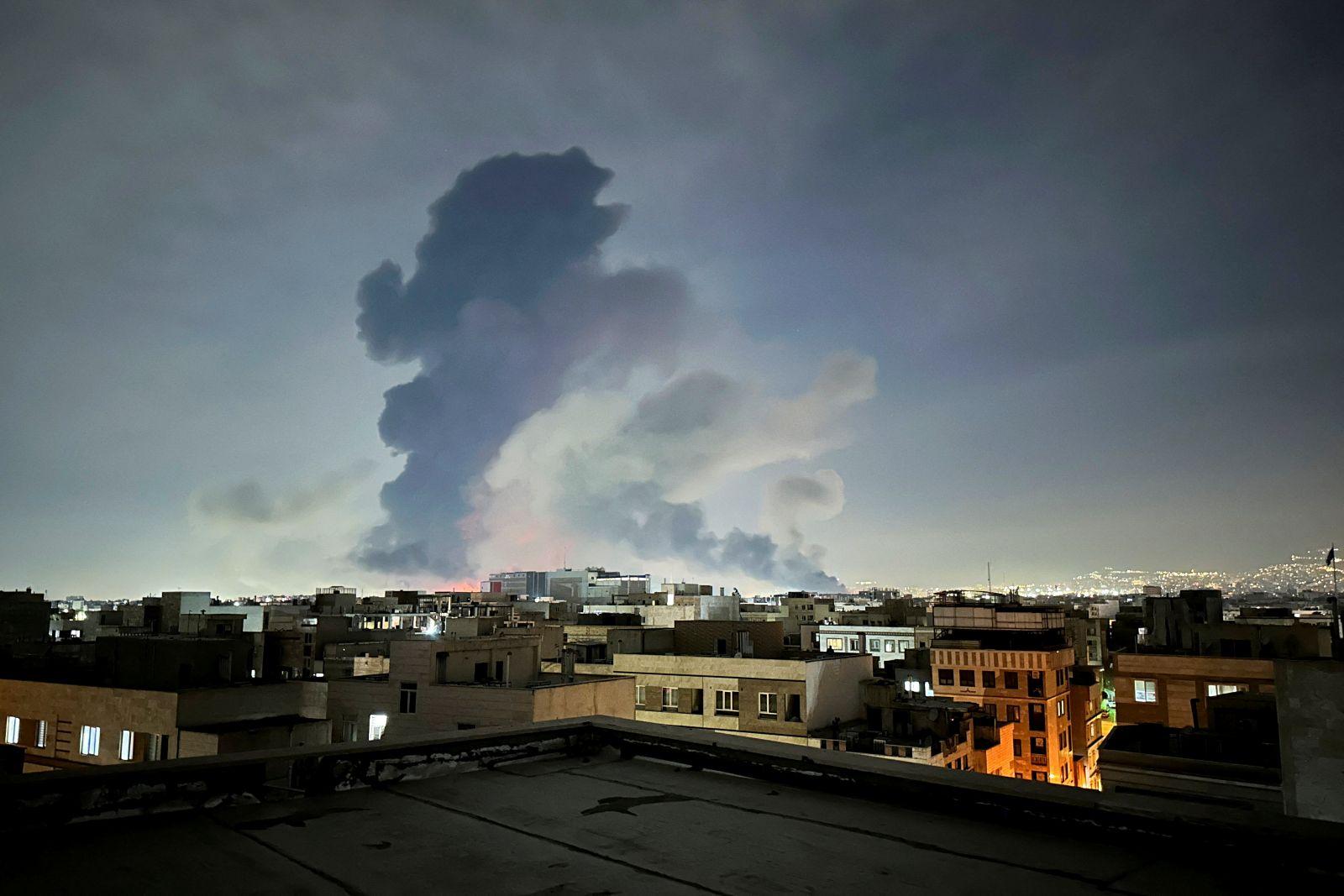
The beginning of Week 4 of the conflict in the Middle East has been marked by a roller coaster-like series of events, with Donald Trump on March 22 threatening to "obliterate" Iran's power plants if Tehran did not fully reopen the Strait of Hormuz in 48 hours, a significant escalation barely a day after he talked about "winding down" the war.
The following day, oil prices went down after Trump announced on Truth Social that he had ordered the postponement of military action against Iran, claiming the US and the Islamic Republic had very good and productive conversations for a complete resolution of the conflict. Iran has since denied negotiating with the US, calling it fake news.
Please refresh the following article for daily updates on the Middle East conflict and its impact on global oil prices.
Day 24
Trump said on Monday, March 23, that he gave instructions to postpone any military strikes against Iranian power plants for five days, just hours ahead of a deadline that threatened further escalation in the conflict now in its fourth week.
In a post on Truth Social, Trump said that the US and Iran have had "VERY GOOD AND PRODUCTIVE" conversations with Iran over the past two days about a "COMPLETE AND TOTAL RESOLUTION OF HOSTILITIES IN THE MIDDLE EAST."
After Trump made the announcement, the price of US crude fell 8.58% to $89.80 a barrel, and Brent fell to $101.89 per barrel, down 9.14% on the day.
The Dow Jones Industrial Average rose 1,021.70 points, or 2.24%, to 46,599.17, the S&P 500 rose 136.26 points, or 2.09%, to 6,642.74, and the Nasdaq Composite rose 493.02 points, or 2.28%, to 22,140.63.
Day 25
Iran, on Tuesday, March 24, denied that it had engaged in negotiations with the US, after Trump postponed a threat to bomb Iran's power grid because of what he described as productive talks with unidentified Iranian officials.
"No negotiations have been held with the US, and fake news is used to manipulate the financial and oil markets and escape the quagmire in which the US and Israel are trapped," Iranian parliament speaker Mohammad Baqer Qalibaf said.
On the same day, Iran was reported to have launched multiple waves of missiles at Israel, after Donald Trump postponed a threat to bomb the Islamic Republic's power grid because of what he described as productive talks with Iranian officials.
The missiles triggered air raid sirens in parts of Israel, including Tel Aviv, where blasts from interceptions were heard. In one attack, homes in northern Israel were damaged by falling debris following an interception. No deaths were reported.
Brent crude oil jumped back above $100 a barrel on Tuesday, a day after plunging more than 10 percent in reaction to Trump's decision to delay fresh strikes on Iran as he hailed "very good" talks with Tehran.
Brent rose 2.9 percent to $102.84, while West Texas Intermediate jumped 3.5 percent to $91.20.
Day 26
Iran was reported on Wednesday, March 25, to have told International Maritime Organization member states that "non-hostile vessels" may transit the Strait of Hormuz if they coordinate with Iranian authorities.
US President Donald Trump was quoted as saying that the US was making progress in its efforts to negotiate an end to the war with Iran, including winning an important concession from Tehran, while a source confirmed that Washington had sent Iran a 15-point settlement proposal.
Oil prices, which have risen sharply since the US-Israeli war on Iran began, eased slightly on Wednesday, March 25, with Brent crude futures down 4.1% at $100.25 a barrel, and US West Texas Intermediate crude futures down 3.7% at $88.91 a barrel.
This developed amid reports that the US is seeking a month-long ceasefire with Iran, even though Iran rejected the idea of negotiations.
In the Philippines, the peso lost 15 centavos to close at P60.1:$1 a day after the government declared a state of national energy emergency to deal with the rising cost of fuel and ensure its supply.
Day 27
On March 26, it was reported that Iranian Foreign Minister Abbas Araghchi said Iran did not plan to negotiate with the United States and intended to keep fighting, after the White House said talks were ongoing.
In Malaysia, Prime Minister Anwar Ibrahim said he had spoken to the leaders of Iran, Egypt, Turkey and other regional countries and said Malaysian vessels were now being allowed to pass through the Strait of Hormuz.
In the Philippines, groups staged the first of a two-day transport strike amid the massive fuel price hikes, causing commuters to be stranded in parts of Metro Manila.
The government reported the arrival of 700,000 barrels of Russian oil even as representatives of oil companies told a Senate inquiry that they have only until April.
Myanmar is also feeling the effects of the Middle East conflict.
Myanmar's economy, battered by five years of civil war since a military coup in 2021, is reeling under a fresh blow from the Iran conflict, which has driven up global oil prices and made domestic supplies scarce.
The pump price of diesel in Myanmar stood at 3,800 kyat ($1.80) per liter by mid-March, up from 2,450 kyat ($1.16) in February.
In Thailand, the surge in diesel prices triggered by the US-Israeli war on Iran is pushing it's multibillion-dollar fishing industry towards a standstill, with fishermen warning that their boats could be idled within days unless the government steps in.
At the country's largest fishing port in a central province along the coast of the Gulf of Thailand, over half of the fishing trawlers are already docked and those still operating would likely stop work within days, said Jumpol Kanawaree, president of the Samut Sakhon Fishmonger Association.
Day 28
On March 27, Donald Trump was reported to have said that Iran allowed 10 oil tankers to pass through the strategic Strait of Hormuz as a "present" to show it was serious about negotiations to end the war.
Iran's Islamic Revolutionary Guard Corps said on Friday that shipping "to and from ports of allies and supporters of the Israeli-American enemies" is prohibited through any corridor or to any destination.
In Dubai, 342 Filipino repatriates processed by the Philippine Consulate General (PCG) and the Migrant Workers Office (MWO) departed the city early Friday morning. Many of them will be seeking a fresh start back home as the country grapples with the impact of the Middle East conflict.
Trump also remarked that the US does not “have to be there for NATO” as he said he was upset that European NATO countries had declined to provide material support to the US as it nears the fourth week of its ongoing war on Iran.
European allies were not consulted by the US on its decision to attack Iran late last month, and many leaders in the alliance opposed the action.
Meanwhile, 12 US troops were wounded during an Iranian military strike on Prince Sultan Air Base in Saudi Arabia, bringing the number of US military service members wounded in the conflict to more than 300.
Day 29
On March 28, Israel said it detected a missile fired from Yemen, the first since the Iran war began.
Hours earlier, Yemen's Iran-aligned Houthis said they were prepared to act if what the group called an escalation against Iran and the “axis of resistance” continued, but did not say what form any intervention would take.
In the Philippines, the Energy Regulatory Commission (ERC) ordered directed distribution utilities (DUs) experiencing a significant increase in generation costs due to the fuel price shock resulting from the Middle East war to submit detailed reports to enable timely regulatory intervention and consumer protection.
The ERC said its directive specifically applies to DUs with an increase in their blended generation rate of more than P1 per kilowatt-hour compared to the previous supply month.
Day 30
On March 29, US Secretary of State Marco Rubio said the United States is expecting to conclude its military operations in the Middle East even as a new deployment of US Marines started arriving in the region.
This is as Yemen’s Iran-aligned Houthis launched their first attacks on Israel since the start of the conflict. The Houthis said they would continue their operations until “aggression” on all fronts have ended.
Meanwhile, the Washington Post reported that the Pentagon is preparing for weeks of ground operations in Iran.
In response, Iran said it is ready to respond to a US ground attack and accused Washington of preparing a land assault while seeking negotiations to end the fighting.
The International Transport Workers’ Federation (ITF)’s Seafarer Support team said it is overwhelmed with messages from crews stuck in the Gulf by the Middle East war, desperately seeking repatriation, compensation and onboard supplies.
Also on Sunday, Executive Secretary Ralph Recto said the government is expecting the arrival of the first batch of 1.04 million barrels of diesel to arrive this week, which he said is the result of the “oil diplomacy” conducted by the Department of Energy (DOE).
Recto added that Indonesia also gave an “ironclad guarantee of a steady supply of coal.”
For its part, the Civil Aviation Authority of the Philippines (CAAP) said airports under its supervision have enough reserve diesel in case of power interruptions. Diesel is used to power generator sets that are used as back-up electricity sources in airports.
The sixth chartered repatriation flight arranged by the government also arrived in Manila on Sunday, bringing home 338 distressed Filipinos from the United Arab Emirates.
Day 31
On March 30, Iran described US proposals to end a month of war in the Middle East as "unrealistic, illogical, and excessive" and unleashed more missiles on Israel.
Brent crude oil rose 3% on Monday and was on track for a record monthly rise while global stocks were in limbo as investors dug in for a Gulf conflict they fear will bring a spike in inflation and the risk of recession to much of the globe.
In the Philippines, oil companies announced increases of up to P2.90 per liter in gasoline prices and as much as P12.90 per liter in diesel prices.
The peso slid to a new record low of P60.69 versus the US dollar.
Day 32
On March 31, Iran attacked and set ablaze a fully loaded oil tanker off Dubai, and US President Donald Trump told countries that had not helped in the conflict to find "some delayed courage" to take the Strait of Hormuz and get their own oil.
The global price of oil continued to rise as Brent crude futures were up nearly 5% on the day at $118.38 a barrel, on track for their biggest monthly gain on record.
In the Philippines, fuel companies announced double-digit increases in the respective prices of their LPG, from P17 to P20 per kilo. Department of Energy figures showed the price per liter of diesel went up by up to P63.31 since the start of the Middle East conflict; gasoline by up to P41.40, and kerosene by P68.93.
The peso, on the other hand, hit a new record low P60.748 against the US dollar–the eighth all-time low since the conflict started when US and Israel attacked Iran on February 28.
Day 33
On April 1, an oil tanker leased to state-owned QatarEnergy was hit by an Iranian cruise missile in Qatari waters.
Qatar was targeted by three cruise missiles coming from Iran; two were intercepted while the third hit the Aqua 1 fuel oil tanker, but caused no casualties.
In the Philippines, the government asked Iran to designate it as a “non-hostile country” and ensure the safe passage of Philippine-flagged vessels along the Strait of Hormuz amid the tensions in the Middle East.
Day 34
On April 2, Israel said it came under Iranian missile fire after US President Donald Trump threatened to bomb the Islamic Republic into the "Stone Ages" with heavy strikes in the next two to three weeks.
The front-month Brent contract for June LCOc1 jumped about 5% to $106.16 per barrel after investors found little reassurance in Trump’s speech, which failed to spell out when or how the Strait of Hormuz - a critical fuel shipping route - would reopen to ease supply disruptions hitting Asia hard.
In the Philippines, the Department of Foreign Affairs announced that Iran, in a phone conversation between Foreign Affairs Secretary Theresa Lazaro and Iranian Foreign Minister Seyed Abbas Aragchi, assured that Philippine-flagged vessels, energy sources, and all Filipino seafarers would be allowed safe passage through the strait.
Day 35
On April 3, a container ship belonging to French shipping group CMA CGM was reported to have passed through the Strait of Hormuz, MarineTraffic vessel tracking data shows, in a sign that Iran may not consider France a hostile nation.
The United Nations Food and Agriculture Organization on Friday said food prices climbed in March to their highest level since September 2025 and could rise further if the Middle East conflict that pushed up energy prices continues.
In the Philippines, an industry source said the massive fuel price hikes due to the Middle East conflict are expected to continue next week.
Based on Mean of Platts Singapore (MOPS) trading in the past four days (March 30 to April 2), retail diesel prices could increase by P17 to P19 per liter. These projections could push the price of regular diesel to as much as P165 and premium diesel past P170 per liter.
Gasoline prices, on the other hand, are expected to increase by P3 to P5 per liter, potentially bringing the prices of its super premium, premium, and regular varieties to about P120, P117, and P110 per liter, respectively.
Day 36
On April 4, Iran's Foreign Minister Abbas Araghchi hinted at the possibility of peace negotiations with the United States through Pakistan's mediation, while US President Donald Trump repeated his threats to intensify attacks on Iran if it failed to reach a deal or open the key Strait of Hormuz waterway.
Meanwhile, Iranian forces were hunting for a missing US pilot on Saturday from one of two warplanes downed over Iran and the Gulf.
Iranian state media also reported air strikes at a petrochemical zone in southwestern Iran, with five people reported injured so far.
A projectile also hit an auxiliary building near the perimeter of Iran's Bushehr nuclear plant, the Tasnim news agency said, killing one person. The operations of the plant were unaffected.
In the Philippines, Department of Energy Secretary Sharon Garin said Iran's decision to allow energy supplies headed for the Philippines to safely cross the Strait of Hormuz was part of the government's risk management initiatives and would not immediately bring down domestic fuel prices.
Garin said "a safe and preferential access" to the Strait of Hormuz would reduce the risk of oil supply disruptions, strengthen protection for Philippine-linked cargo, and improve the safety considerations for Filipino seafarers amid the US-Israeli war on Iran.
"We also want to manage expectations: This development will not immediately bring down fuel prices, nor does it resolve our long-term structural challenges in energy. Those remain priorities that we continue to address," she added.
On Saturday, 67 overseas Filipinos from Qatar arrived at the Ninoy Aquino International Airport (NAIA) Terminal 3 as part of the government's efforts to repatriate distressed Filipinos amid the conflict.
Day 37
On April 5, US President Donald Trump, in an expletive-laden social media post, said the United States will target Iran’s power plants and bridges on Tuesday if the Strait of Hormuz is not reopened.
In the Philippines, the Presidential Communications Office (PCO) warned the public against spreading fake news about energy security, supply, or pricing amid the soaring fuel prices caused by the ongoing conflict in the Middle East.
PCO Acting Secretary Dave Gomez said any attempt “to mislead the public about energy security, supply, or pricing to sow confusion will be treated as a serious offense” and that the PCO’s filing of charges will be in coordination with the Department of Justice (DOJ).
Gomez said publishing fake news can lead to six months of imprisonment under the Revised Penal Code and that if done online, the penalty is doubled under the Cybercrime Prevention Act.
Day 38
On April 6, Iran said it wanted a lasting end to the war with the US and Israel, and pushed back against pressure to swiftly reopen the Strait of Hormuz under a temporary ceasefire as the Americans and the Iranians weighed a framework plan to cease their five-week-old conflict.
Iran conveyed its response to the US proposal for ending the war to Pakistan, rejecting a ceasefire and emphasizing the necessity of a permanent end to the war, the official IRNA news agency said on Monday.
Donald Trump, who has threatened to rain "hell" on Tehran if it did not make a deal by 8 p.m. EDT Tuesday (midnight GMT) to open the vital route for global energy supplies, rejected the Iranian proposal on Monday and said his deadline was final.
Oil prices fell in choppy trade, as investors awaited clarity on the status of talks between the US and Iran and remained wary about sustained supply losses due to shipping disruptions.Brent crude futures inched 36 cents lower, or 0.33%, to $108.67 a barrel at 1222 GMT. US West Texas Intermediate crude futures were trading down 0.86%, or 96 cents, at $110.58 per barrel.
In the Philippines, fuel companies announced another round of increases in the price per liter of gasoline (up to P5.90), diesel (up to P19.80), and kerosene (up to P9.10).
The Department of Migrant Workers (DMW) also reported the safe return of 27 overseas Filipinos – 20 from Qatar and seven from Lebanon – to Manila on Monday.
Day 39
On April 7, Iran said critical infrastructure, including two bridges, was struck on Tuesday by the United States and Israel, with US President Donald Trump warning "a whole civilization will die" if a midnight deadline for a deal to open the Strait of Hormuz was not met.
Oil prices edged above $110 per barrel as the looming deadline imposed by Trump for a deal with Iran threatened escalation in the Middle East and spooked investors.
In the Philippines, former Energy Secretary Jericho Petilla said Filipinos should brace for a prolonged period of high fuel prices despite the possible end to the Middle East conflict, tax cuts, and government interventions.
Energy Secretary Sharon Garin said some Philippine-flagged ships are already on the Strait of Hormuz after Iran assured the Philippines of safe passage for vessels, people, and goods bound for the country.
Day 40
On April 8, US President Donald Trump agreed to a two-week ceasefire with Iran less than two hours before his deadline for Tehran to reopen the Strait of Hormuz or face devastating attacks on its civilian infrastructure.
Trump’s announcement on Truth Social was an abrupt turnaround from his previous extraordinary warning that “a whole civilization will die tonight” if his demands were not met.
“This will be a double sided CEASEFIRE!... The reason for doing so is that we have already met and exceeded all Military objectives, and are very far along with a definitive Agreement concerning Longterm PEACE with Iran, and PEACE in the Middle East,” he said.
Trump said the last-minute deal was subject to Iran’s agreement to pause its blockade of oil and gas supplies through the strait, which typically handles about one-fifth of global oil shipments.
Iran’s foreign minister, Abbas Araqchi, said Tehran would stop counter-attacks and provide safe passage through the waterway.
Trump later told Agence France-Presse (AFP) that the United States won a “total and complete victory” after agreeing to a two-week ceasefire deal with Iran.
He believed that China had persuaded Iran to negotiate and assured that Tehran’s enriched uranium would be “perfectly taken care of.”
Trump added that the US will help with the buildup of shipping traffic in the Strait of Hormuz and “just ‘hangin’ around” to make sure that everything goes well.
Following the declaration of the ceasefire, US and European energy stocks slid on Wednesday with oil falling $100 per barrel.
President Ferdinand Marcos Jr. said the Philippines will take advantage of the two-week ceasefire between the United States and Iran and increase the country’s petroleum supply.
He also expressed hope that the ceasefire will extend further if the talks go well.
However, Energy Secretary Sharon Garin told House members that the country cannot simply keep buying large volumes of oil to build up its reserves because it has a limited storage capacity.
Meanwhile, the Commission on Higher Education (CHED) gave the go-signal to universities and colleges to shift to full online classes for the rest of the academic year in light of the fuel crisis brought about by the Middle East conflict.
Day 41
On April 9, share markets sagged as cracks quickly began to appear in the fragile truce in the Middle East, nudging oil prices back up toward $100 a barrel and reminding investors that the inflationary fallout would last a long while yet.
This developed after Israel carried out its heaviest strikes on Lebanon since the conflict with Hezbollah broke out in March, even as the Iran-aligned group paused attacks on northern Israel and Israeli troops in Lebanon under a two-week US-Iran ceasefire.
In the Philippines, an oil industry source said motorists may expect a rollback in the price of fuel after Mean of Platts Singapore prices and premiums “softened due to the ceasefire deal in the Middle East.”
The estimated reductions in pump prices are P2.50 to P3.40 per liter of diesel, and P1.00 per liter of gasoline.
Day 42
On April 10, it was reported that US President Donald Trump warned Tehran not to charge tolls on ships crossing the Strait of Hormuz, as a mounting global energy crisis prompted Japan to announce a further emergency oil release.
The Iran war has damaged Gulf energy production, stranded tanker traffic, and boosted oil prices by about 50% in the world's worst energy shock, with Asian buyers among the hardest hit.
In the Philippines, public utility vehicle (PUV) drivers and private motorists find the expected fuel price rollback next “too small” after weeks of massive increases.
While no final amount has been provided yet, oil industry sources claim that reductions may be around P5.50 to P6.40 per liter of diesel and up to P1 per liter of gasoline.
Day 43
Senior US and Iranian leaders met in the Pakistani capital Islamabad on Saturday, April 11, for negotiations to end their six-week-old war. A Pakistani source told Reuters that it was too early to say whether talks would end on Saturday, adding there was no time limit for negotiations.
In the Philippines, Energy Secretary Sharon Garin announced the arrival of over 300,000 barrels of diesel from Malaysia to boost the country’s stockpile of fuel amid the ongoing Middle East crisis.
Citing the results of the April 6–10, 2026 Mean of Platts Singapore (MOPS) trading and foreign exchange averages, an oil industry source projected that diesel and gasoline prices might drop by up to P10.80 and P1.50, respectively, next week.
Day 44
On April 12, the United States and Iran failed to reach an agreement to end their war despite marathon talks that concluded on Sunday in Islamabad in Pakistan, jeopardizing a fragile ceasefire.
US Vice President JD Vance, the head of the US delegation, told reporters that the failure to reach an agreement is “bad news for Iran much more than it’s bad news” for the US.
While world figures urged the US and Iran to keep negotiating after the talks ended without a deal to end the Middle East conflict, US President Donald Trump said the US Navy would immediately start blockading the Strait of Hormuz.
In a post on Truth Social, Trump said the US would interdict every vessel in international waters that paid a toll to Iran, and begin destroying mines that he said the Iranians dropped in the strait.
Meanwhile in the Philippines, the Department of Energy (DOE) said the price of diesel may decrease by P20.89 per liter while gasoline prices may slide down to P4.43 per liter and kerosene, P8.50 per liter this week.
In a Facebook post, DOE Secretary Sharon Garin said the estimated price adjustments are for April 14 (Tuesday) to April 20 (Monday).
President Ferdinand Marcos Jr. confirmed the big rollback in pump prices in a video message later on Sunday afternoon.
Day 45
US President Donald Trump on Sunday said pump prices may remain high through November’s midterm elections, a rare acknowledgement of the potential political fallout from his decision to attack Iran six weeks ago. The average price for regular gas at US service stations has exceeded $4 per gallon for most of April.
Following Trump’s move to immediately start blockading the Strait of Hormuz, the US military said it would begin a blockade of all Iranian ports on Monday, including all Iranian ports on the Arabian Gulf and the Gulf of Oman.
However, the US’ NATO allies – including Britain and France – on Monday, April 13 said they would not get involved in Trump’s plan to blockade the Strait of Hormuz.
NATO allies said it is vital to open the waterway through which one-fifth of the world’s oil usually passes, which Iran has effectively closed since the conflict began on February 28.
Meanwhile, the Department of Foreign Affairs (DFA) said Philippine-flagged vessels are assured of safe passage through the Strait of Hormuz despite Trump’s threat of a blockade following the failed peace talks in Pakistan.
DFA Secretary Ma. Theresa Lazaro said the agreement between the Philippines and Iran remains the same.
On the other hand, Philippine financial markets opened the week on a negative note amid the developments in the Middle East, with the Philippine peso depreciated back to the P60:$1 level, shedding 16.5 centavos to close at P60.135:$1 from last Friday’s finish of P59.97:$1.
On Monday afternoon, President Ferdinand Marcos Jr. announced that he has removed the excise taxes on LPG and kerosene amid high fuel prices in the country, exercising the emergency powers on fuel excise taxes granted to him under Republic Act 12316.
Marcos said will reduce the price of LPG by P3.36 per kilo or almost P37 per tank, and P5 per liter for kerosene products.
As to calls to remove the value-added tax on fuel products, Marcos said this move would only help the petroleum market, but said he will study the proposal.
Day 46
On April 14, a Chinese tanker sanctioned by the United States passed through the Strait of Hormuz despite a US blockade on the chokepoint, shipping data showed.
In the Philippines, the Department of Energy on Tuesday said the government is seeking another window or extension of a sanctions waiver from the United States to allow continued oil imports from Russia, even as alternative suppliers are available should the request be denied.
Day 47
On April 15, finance ministers from almost a dozen countries, led by Britain, called on the United States, Israel, and Iran to implement their ceasefire in full, adding that the Middle East conflict would weigh on the global economy and markets even if it was resolved soon.
A joint statement, signed by ministers from Australia, Japan, Sweden, the Netherlands, Finland, Spain, Norway, Ireland, Poland, and New Zealand, as well as Britain, was agreed upon a day after the International Monetary Fund cut its global economic growth forecasts because of the war.
In the Philippines, some transport groups took part in the first of a three-day transport strike, and called for a price rollback of P55 per liter of diesel amid the oil price shocks caused by the conflict.
Day 49
On April 17, Iranian Foreign Minister Abbas Aragchi was reported as saying that the Strait of Hormuz was open following a ceasefire accord agreed in Lebanon, while US President Donald Trump said he believed a deal to end the Iran war would come "soon", although the timing remains unclear.
Aragchi said in a post on X that the Strait was open for all commercial vessels for the remainder of the US-brokered 10-day truce between Israeli forces and Iran-backed Hezbollah agreed between Israel and Lebanon.
In the Philippines, an oil industry source said consumers and motorists should expect another hefty rollback in fuel prices in the coming week.
The estimated reductions in the retail prices of petroleum products are as follows:
Diesel - P17.00 to P19.00 per liter Gasoline - P2.00 to P3.00 per liter
Day 50
Iran declared the Strait of Hormuz closed again on Saturday after US President Donald Trump insisted that a US naval blockade of Iranian ports would continue until a deal was concluded.
Nevertheless, Trump appeared convinced that a deal could be finished soon.
In the Philippines, President Ferdinand Marcos Jr. urged oil companies to implement the rollback for both diesel and gasoline prices in full and without delay.
Marcos stated in a video message that diesel prices are projected to decrease by P24.94 per liter next week, while gasoline prices are expected to drop by P3.41 per liter. The cost of kerosene is expected to fall by P2.00 per liter.
Day 51
On April 19, Iran’s top negotiator Mohammad Baqer Qalibaf said recent talks with the United States had made progress, but gaps remained over nuclear issues and the Strait of Hormuz.
US President Donald Trump, for his part, cited “very good conversations” with Tehran despite warning against “blackmail” over the key shipping channel.
Later in the day, however, Trump accused Iran of “total violation” of the two countries’ ceasefire for firing on ships near the Strait of Hormuz.
In a post on social media, he renewed a threat to wipe out Iran’s bridges and power plants unless it accepted his terms.
Trump said his envoys would arrive in Pakistan on Monday evening to hold more talks.
“We’re offering a very fair and reasonable DEAL, and I hope they take it because, if they don’t, the United States is going to knock out every single Power Plant, and every single Bridge, in Iran,” he posted on social media. “NO MORE MR. NICE GUY!”
Day 52
On April 20, concerns grew that the ceasefire between the United States and Iran might not hold after the US said it had seized an Iranian cargo ship that tried to run its blockade and Iran vowed to retaliate.
Efforts to build a more lasting peace in the region likewise appeared to be on shaky ground, as Iran said it would not participate in a second round of negotiations that the US had hoped to kick off before the ceasefire expires on Tuesday.
Ships were largely avoiding the Strait of Hormuz on Monday after an escalation at the weekend in which Iran fired what appeared to be warning shots at vessels and the US military seized an Iranian cargo ship.
Just one ship exited the Gulf through the strait while two entered in the space of 12 hours, ship-tracking data showed on Monday, a fraction of what is usually about 130 vessels per day.
In the Philippines, the Department of Energy said oil companies are now mandated to comply with the minimum and maximum amount that the government would set regarding hikes and rollbacks in the price of petroleum products amid the state of national energy emergency.
Day 53
United States President Donald Trump dismissed the opinion of US Energy Secretary Chris Wright that gas prices will not drop until 2027. For Trump, Americans can expect lower costs as soon as the Iran war ends.
“I think he’s wrong on that. Totally wrong,” Trump said, adding that pump prices are expected to dip “as soon as this ends.”
He also believed that a nuclear deal the US is negotiating with Iran will be better than the international agreement agreed to in 2015 to curb Tehran’s nuclear program.
“The DEAL that we are making with Iran will be FAR BETTER than the JCPOA, commonly referred to as ‘The Iran Nuclear Deal,’” Trump wrote in a social media post.
Meanwhile, US and European stocks reversed as oil prices surged over fears thhat hostilities could resume in the weeks-long Middle East war after Iran closed the Strait of Hormuz following its brief reopening.
Shipping data also showed that shipping traffic through the Strait of Hormuz remained broadly halted on Tuesday, April 21 with only three ships passing the waterway in the past 24 hours.
In the Philippines, the Subic Bay Metropolitan Authority (SBMA) on Tuesday reported that the Philippine National Oil Company (PNOC) received a shipment of 329,505 barrels or 44,119 metric tons of diesel at the Port of Subic Bay to boost the country’s fuel supply.
Day 54
The cost of repairing energy infrastructure in the Middle East which was damaged in the US-Iran war may reach between $34 billion and $58 billion, according to estimates from Rystad Energy.
This is as at least 44 facilities linked mainly to oil and gas – depots, refineries, and extraction fields – have suffered damage, as well as a dozen energy transport sites.
The most severe scenario forecasts that the bill for fixing oil and gas facilities alone could reach $50 billion.
Meanwhile, US President Donald Trump indefinitely extended the ceasefire with Iran hours before it was set to expire to allow the two countries to continue peace talks.
In a statement on social media, Trump said he agreed to a request by Pakistan, which has mediated peace talks, “to hold our Attack on the Country of Iran until such time as their leaders and representatives can come up with a unified proposal.”
Oil prices retreated after Trump’s announcement.
On April 22, Iran seized two ships in the Strait of Hormuz and escorted them to Iranian shores, tightening its hold on the strategic waterway after Trump’s announcement to call off attacks indefinitely.
Meanwhile, companies from consumer goods to travel and mining warned that the US-Israeli war with Iran is driving up costs, disrupting supply chains and hurting consumer confidence, clouding financial outlooks.
In the Philippines, a dramatic increase in airfares is expected in the second half of April as the Civil Aeronautics Board (CAB) raised the fuel surcharge level for domestic and international flights to Level 19.
This means that the passenger fuel surcharge ranges between P627 and P1,824 for domestic flights; while for international flights, the surcharge ranges from P2,070.77 to P15,397.15.
Day 57
Iranian Foreign Minister Abbas Araqchi laid out Iran's demands and its reservations about US positions on Saturday, April 25, as Pakistan made a new push to end a war that has killed thousands and shaken global energy markets.
Washington and Tehran are at an impasse as Iran has largely closed the Strait of Hormuz, which normally carries one-fifth of global oil and liquefied natural gas (LNG) shipments, while the US blocks Iran's oil exports.
In the Philippines, the Department of Energy (DOE) and the Philippine National Oil Company (PNOC) announced that they have procured 21,000 metric tons of liquefied petroleum gas (LPG) from the United States.
"The incoming shipment, scheduled for delivery from May 20 to 31 and to be discharged in Batangas, will boost the country's LPG inventory and strengthen supply buffers for households and businesses," the DOE said in a statement.
A major rollback in diesel prices is expected next week, according to industry estimates.
In a "24 Oras Weekend" report on Saturday, oil industry sources projected a decrease of up to P11 per liter for diesel.
However, gasoline prices may either remain unchanged or increase by P0.95 to P2 per liter, the same sources said.
Day 58
US President Donald Trump canceled his envoys’ trip to Pakistan for peace talks with Iran on Saturday, claiming there was no point “sitting around talking about nothing” while saying that the war would not immediately resume.
Trump told reporters that he scrapped the visit after being unimpressed with Tehran’s negotiating position, adding that a revised proposal followed within minutes of his decision.
In the Philippines, President Ferdinand Marcos Jr. on Sunday assured that the government would continue delivering public services despite the country’s energy woes.
The Philippine National Police (PNP) also reported that 290 out of 14,529 gas stations nationwide have temporarily closed amid ongoing oil supply concerns.
The PNP recorded 31 cases involving alleged violations related to petroleum products, including hoarding, profiteering, and other offenses.
Meanwhile, the Archdiocese of Manila urged parishes under its jurisdiction to organize a systematic collection of used cooking oil to be converted into biodiesel, a renewable and cleaner fuel.
In a circular dated April 21, Manila Archbishop Jose Cardinal Advincula said this initiative reduces waste and greenhouse gas emissions and supports local and sustainable energy alternatives.
Day 60
On April 28, the two-month-long conflict is at an impasse and energy and other supplies are still failing to cross through the critical Strait of Hormuz, pushing oil prices above $110 a barrel.
Brent crude oil rose 3% to $111.40 a barrel, a three-week high, while US oil was up 3.8% at $100.
The United Arab Emirates said on Tuesday it was quitting OPEC, dealing a heavy blow to the oil producers’ group as an unprecedented energy crisis triggered by the Iran war exposes discord among Gulf nations.
In the Philippines, the Department of Energy (DOE) projected that oil price hikes in the country due to the war between US-Israeli forces and Iran could last up to the end of the year.
Day 61
On April, 29, oil prices climbed after a Wall Street Journal report cited US officials saying President Donald Trump instructed aides to prepare for an extended blockade of Iran.
In the Philippines, the Philippine National Police (PNP) on Wednesday said a total of 294 gasoline stations have been closed following inspections conducted amid concerns over fuel prices.
Thirty-one cases have been filed and 77 individuals have been arrested in connection with fuel-related offenses. Most of the violations involved hoarding and profiteering.
Day 62
US President Donald Trump discussed how to mitigate the impact of a possible months-long US blockade of Iran’s ports with oil companies, according to a White House official.
This is as Trump urged Tehran to “get smart soon” and sign a deal.
Iran, on the other hand, said it would respond with “long and painful strikes” on US positions if Washington renewed attacks, and also reasserted its control over the Strait of Hormuz, complicating US plans for a coalition to reopen the waterway.
IMF Director for Asia Pacific Krishna Srinivasan cautioned countries against ramping up energy subsidies amid the crisis, saying countries should instead provide budget neutral and targeted fiscal support, and maintain fiscal discipline.
In the Philippines, Energy Secretary said there is a possible increase in oil prices in the coming week amid the continued weakening of the Philippine peso against the US dollar.
Day 63
US President Donald Trump's administration said that a ceasefire with Tehran had "terminated" hostilities as a legal deadline arrived on Friday for coming to Congress about the two-month Iran war.
Under the 1973 War Powers Resolution, the president can wage military action for only 60 days before ending it, asking Congress for authorization or seeking a 30-day extension due to "unavoidable military necessity regarding the safety of United States Armed Forces" while withdrawing forces.
In the Philippines, an oil industry source said the following price increases are expected to be implemented by fuel retailers next week:
- Diesel - P1.00 to P2.00 per liter
- Gasoline - P2.00 to P3.00 per liter
The Department of Energy on Thursday said there could be a possible increase in pump prices in the coming week due to the continued weakening of the Philippine peso against the US dollar.
Day 64
US President Donald Trump said he was not satisfied with the latest Iranian proposal for talks on the Iran war, while Iran’s foreign minister said Tehran was ready for diplomacy if the United States changes its approach.
In the Philippines, economist Emmanuel Leyco, a fellow at the Centre for People Empowerment in Government, said suspending the collection of excise tax on petroleum products would be felt the fastest by the poor in a bid to ease the inflationary impact of global oil price spikes amid the Middle East war.
Day 65
A senior Iranian official said an Iranian proposal so far rejected by US President Donald Trump would open shipping in the Strait of Hormuz and end the US blockade of Iran while leaving talks on Iran’s nuclear program for later.
Trump said he was told about the concept of a deal with Iran, but was waiting for the exact wording, while warning there was still the possibility of restarting strikes on the country if Tehran misbehaves.
“They told me about the concept of the deal. They’re going to give me the exact wording now,” Trump said, adding on his social media channel that he could not imagine the proposals would be acceptable and that Iran had not paid a big enough price for what it had done.
Day 66
On May 4, the US military said on Monday it destroyed six Iranian small boats and intercepted Iranian cruise missiles and drones fired by Tehran as the U.S. launched an operation to free up shipping through the Strait of Hormuz.
Before this, Iran said it had forced a US warship to turn back from entering the Strait of Hormuz on Monday, but a US official denied a report that it had been struck by Iranian missiles, according to an Axios journalist.
Brent crude oil jumped over 5%, and the dollar strengthened after Iran's navy said it had prevented a US warship from entering the Strait of Hormuz. US stock futures, European stocks, and bond prices fell.
In the Philippines, the Land Transportation Franchising and Regulatory Board (LTFRB) issued show cause orders to 21 transport network companies (TNCs) over alleged discrepancies in the number of fuel subsidy beneficiaries.
Day 68
On May 6, the United States and Iran were reported to be closing in on an agreement on a one-page memorandum to end the war in the Gulf, a source from mediator Pakistan and another source briefed on the mediation said.
The sources confirmed information initially reported by the US media outlet Axios. The proposed 14-point, one-page memorandum would formally end the war, followed by discussions to unblock shipping through the Strait of Hormuz, lift US sanctions on Iran, and agree on curbs on Iran's nuclear program.
In the Philippines, the peso gained traction against the US dollar on Wednesday – albeit still within the P61-to-one dollar range – amid an apparent easing of US-Iran tensions in the Middle East.
The local currency gained 24.5 centavos to close at P61.305:$1 from P61.55:$1 on Tuesday.
Share prices on the Philippine Stock Exchange (PSEi) bounced back on Wednesday as investor sentiment improved due to the apparent easing of US-Iran tensions in the Middle East.
The bellwether PSE index gained 69.13 points or 1.17%, closing at 5,967.21 from 5,898.08 on Tuesday.
Day 69
On Thursday, May 7, sources and officials said the United States and Iran are moving toward a limited, temporary agreement to halt their war with a draft framework that would stop the fighting but leave the most contentious issues unresolved.
The emerging plan centers on a short-term memorandum aimed at preventing a return to conflict and stabilizing shipping through the Strait of Hormuz.
“Our priority is that they announce a permanent end to war and the rest of the issues could be thrashed out once they get back to direct talks,” a senior Pakistani official involved in mediation between the two sides said.
The proposed framework would unfold in three stages: formally ending the war, resolving the crisis in the Strait of Hormuz and launching a 30-day window for negotiations on a broader agreement, according to the sources and officials.
Amid optimism over talks aimed at ending the conflict, global oil prices fell by more than 5%on Thursday as the international benchmark, Brent North Sea crude, shed 5.1% to $96.06 a barrel.
On the local front, the Philippine peso regained its footing against the US dollar on Thursday and exited the P61-to-one dollar level, amid optimism that the US and Iran could reach a peace deal.
The local currency gained 88.5 centavos to close at P60.42:$1 from Wednesday's finish of P61.305:$1 – the strongest finish for the peso since April 22, 2026, when it closed at P60.13:$1.
Oil industry sources said there is a possibility of movement in the prices of oil next week.
Diesel prices may go down by P3.80 to P4.50 per liter, while gasoline prices may go up by P1.50 to P2.25 per liter.
Day 70
On May 8, Iranian state media, citing a military statement, reported that Iran seized the oil tanker Ocean Koi in the Gulf of Oman over an alleged attempt to disrupt Iran's oil exports.
It said the Barbados-flagged tanker was carrying Iranian oil and "was trying to harm and disrupt oil exports .... by exploiting regional conditions".
In the Philippines, President Ferdinand “Bongbong” Marcos Jr. said that member states of the Association of Southeast Asian Nations (ASEAN) discussed during the ASEAN Summit the idea of a fuel reserve that the region could use in times of emergency, such as the Middle East conflict.
Day 71
A US intelligence analysis concluded Tehran could withstand a naval blockade for months and would not suffer severe economic pressure from a US blockade of Iranian ports for about another four months.
This suggested that US leverage over Tehran remains limited as the two sides seek to end a conflict that has been unpopular with US voters.
Day 72
On May 10, relative calm prevailed around the Strait of Hormuz after days of sporadic flare-ups, as the United States waited for Iran’s response to its latest proposals to end more than two months of fighting and begin peace talks.
The Wall Street Journal later reported that Israel set up a clandestine military outpost in the Iraqi desert to support its air campaign against Iran and launched airstrikes against Iraqi troops who nearly discovered it.
Israel built the installation, which housed special forces and served as a logistical hub for the Israeli air force, with the knowledge of the US just before the start of the US-Israeli war against Iran, the newspaper said. It also included search-and-rescue teams positioned to assist any downed Israeli pilots, the Journal said.
Meanwhile, Iranian Army Spokesperson Mohammad Akraminia said vessels from countries that comply with US sanctions against Iran will, from now, face difficulties crossing the Strait of Hormuz.
Iranian lawmakers have said they are drafting a bill to formalize Iran’s management of the Strait of Hormuz, with clauses including forbidding passage to vessels of “hostile states.”
Iranian local media later reported that Iran’s response to the latest US peace proposal focuses on “ending the war and maritime security.”
Day 73
Iran’s semi-official Tasnim news agency said an Iranian proposal sent to the United States through mediator Pakistan stresses the need for an end to the war on all fronts and the lifting of sanctions on Tehran.
The proposal emphasizes the necessity of lifting sanctions by the US Office of Foreign Assets Control on Iranian oil sales during a 30-day period and ending the naval blockade on Iran, Tasnim added.
However, US President Donald Trump rejected Iran’s response to a US proposal for peace talks, calling it “totally unacceptable.”
On May 11, South Korea’s presidential Blue House condemned in the strongest terms an attack against a cargo ship operated by a Korean shipper this month in the Strait of Hormuz and said it plans to respond once the source of the attack is identified.
Experts conducted an initial forensic analysis of the damage to the port stern, a Blue House official said. The attack had led to a fire in the vessel’s engine room.
In the Philippines, fuel retailers announced mixed movements on pump prices of petroleum products, marking the third straight week of increase for gasoline.
In separate advisories, Petron Corp., Seaoil Philippines Corp. and Shell Pilipinas Corp. said they will hike prices per liter of gasoline by P0.47, while rolling back those of diesel by P9.57, and kerosene by P13.30.
PTT Philippines Corp., and Unioil Petroleum Philippines Inc. will implement the same changes, excluding kerosene which they do not carry.
The Department of Foreign Affairs (DFA) also reassured that the safe passage for Philippine-flagged vessels and Filipino seafarers through the Strait of Hormuz is still valid despite the reported drone attack on a container ship carrying Filipino crew members.
Day 74
US President Donald Trump said a ceasefire with Iran was “on life support” after Tehran’s response to a US proposal to end the war made clear the two sides were still far apart on a number of issues.
“I would call it the weakest right now, after reading that piece of garbage they sent us. I didn't even finish reading it,” he said.
Meanwhile, a senior Pentagon official on Tuesday said the United States’ war in Iran has cost $29 billion as of April 29, an increase of $4 billion from an estimate provided late last month.
Day 76
On May 14, US President Donald Trump discussed the Iran war with China's President Xi Jinping in Beijing, while new attacks on vessels near the Strait of Hormuz brought a reminder of the costs of a prolonged stalemate, with peace talks stalled.
A White House official said the leaders had agreed that the strait should be open and that Iran should never obtain nuclear weapons. China is close to Iran and is the main buyer of its oil.
Analysts, though, warned that elevated oil prices and the impasse in negotiations to end the war in the Middle East could bring inflationary worries back into view.
Brent crude futures were at $106.5 a barrel in London, while US West Texas Intermediate futures fetched $101.33 per barrel. Both are up roughly 50% since the Iran war erupted in late February.
Day 77
US President Donald Trump told Fox News that he would not be much more patient with Iran as he asked Tehran to reach a deal with Washington while also suggesting that the quest to retrieve Iran's enriched uranium was more about perception than about security.
Meanwhile, the Asian Development Bank announced on Friday, May 15, that it offered up to $1.75 billion in additional financing for the Philippines to manage the economic impact of the Middle East conflict, as the country remains in a national state of energy emergency.
According to the ADB, the $1.75 billion will be made through policy-based and countercyclical lending, along with trade finance if needed, to provide assistance to vulnerable Filipinos and mitigate the impact of the oil supply and other shocks.
An oil industry insider stated that the following price increases are anticipated for next week due to the ongoing conflict:
- Diesel - P2.00 to P2.50 per liter
- Gasoline - P0.75 to P1.25 per liter
Day 79
US President Donald Trump said Chinese President Xi Jinping had agreed Tehran must reopen the Strait of Hormuz, though China gave no indication it would weigh in.
Flying back from Beijing on Friday after two days of talks with Xi, Trump said he was considering whether to lift US sanctions on Chinese oil companies buying Iranian oil. China is the biggest buyer of Iranian oil.
Meanwhile, the Department of Energy (DOE) said the government has approved the sale of diesel at P80 per liter to help sustain electricity supply in areas not connected to the main power grid.
The DOE said up to 45 million liters of diesel procured by the Philippine National Oil Company-Exploration Corporation will be sold over the next three months to support uninterrupted power generation in missionary and off-grid areas.
The agency said the measure aims to sustain power generation, prevent outages, and shield consumers from sharp increases in electricity costs.
Day 80
On Monday, German Finance Minister Lars Klingbeil said the Group of Seven countries is the right forum for discussing how to bring a lasting end to the war in Iran, which, along with the blockade of the Strait of Hormuz, poses a serious threat to the global economy.
Klingbeil will travel to Paris to join a meeting of G7 finance ministers and central bankers on Monday and Tuesday.
Stock markets diverged as investors worried about borrowing costs, while oil prices rose as US President Donald Trump ratcheted up pressure on Iran.
Oil prices briefly turned lower following an Iranian media report said US officials had agreed to suspend sanctions against its crude while talks on ending the war continue.
Day 82
Two Chinese tankers laden with oil exited the Strait of Hormuz on Wednesday, shipping data showed, brightening hopes that the US-Israeli conflict with Iran may soon be resolved after positive comments from the US president and his deputy.
President Donald Trump said on Tuesday the war would be over “very quickly while Vice President JD Vance talked up progress in talks with Tehran about an agreement to end hostilities.
“We’re in a pretty good spot here,” Vance told a White House press briefing.
Trump made his comments a day after saying he had paused a planned resumption of hostilities following a new proposal by Tehran to end the conflict.
Day 84
The US and Iran stuck on Thursday to directly opposing stances over Tehran’s uranium stockpile and controls on the Strait of Hormuz, providing little fodder for hope in Pakistani-led efforts to end the conflict.
President Donald Trump said the US will eventually recover Iran's stockpile of highly enriched uranium – which Washington believes is destined for a nuclear weapon though Tehran says is intended purely for peaceful purposes.
“We will get it. We don’t need it, we don’t want it. We'll probably destroy it after we get it, but we’re not going to let them have it,” Trump told reporters at the White House.
Day 85
Tehran accused the United States of “excessive demands,” Iranian media said on Saturday, as US media reports raised the prospect that Washington was mulling new strikes and leaders of the Islamic republic considered the latest peace proposal.
Day 86
US President Donald Trump wrote on Saturday that a memorandum of understanding on a peace deal with Iran is “largely negotiated,” as both countries and mediators in Pakistan reported progress.
Trump posted on social media that the emerging agreement would reopen the Strait of Hormuz, the vital shipping passage whose closure upended global energy markets after the conflict started in February when the US and Israel launched strikes on Iran.
Trump did not say what else would be included in an agreement. “Final aspects and details of the Deal are currently being discussed, and will be announced shortly,” Trump said.
On Sunday, Trump said he had had told US negotiators “not to rush into a deal” with Iran, amid anticipation that an agreement to end the war in the Middle East was close.
“The negotiations are proceeding in an orderly and constructive manner, and I have informed my representatives not to rush into a deal in that time is on our side,” Trump wrote on his Truth Social account.
“The Blockade will remain in full force and effect until an agreement is reached, certified, and signed.”
Day 87
Israeli Prime Minister Benjamin Netanyahu said he and US President Donald Trump had agreed that any final deal with Iran must fully end the Islamic republic’s “nuclear threat”.
Netanyahu was referring to a conversation between the two leaders on Saturday night, which Trump had earlier said “went very well”.
“President Trump and I agreed that any final agreement with Iran must eliminate the nuclear threat entirely. This means dismantling Iran’s uranium enrichment facilities and removing enriched nuclear material from its territory,” Netanyahu said in a statement.
Meanwhile, oil prices fell about 5% to two-week lows on Monday as optimism grew that the United States and Iran were moving closer to a peace deal that would reopen the Strait of Hormuz, even though Washington and Tehran played down hopes for an imminent breakthrough.
Brent crude futures LCOc1 were down $4.97, or 4.8%, at $98.57 a barrel at 11:19 a.m. ET (1519 GMT) and U.S. West Texas Intermediate CLc1 futures were down $4.85, or 5%, at $91.75. Both contracts traded at their lowest since May 7.
Day 88
The US military carried out strikes in southern Iran against targets including boats attempting to lay mines and missile launch sites, in what it described as defensive actions.
In a statement, the US Central Command said the strikes were designed “to protect our troops from threats posed by Iranian forces” while “while using restraint during the ongoing ceasefire.”
Day 89
Iran said the United States had violated a ceasefire after the US conducted what it called defensive strikes in southern Iran, while US Secretary of State Marco Rubio said negotiating a deal to halt the conflict could “take a few days.”
Iran’s foreign ministry said US strikes in Iran’s southern Hormozgan province, where Iranian media reported sounds of explosions early on Tuesday, represented a “gross violation” of a tenuous ceasefire in place for nearly seven weeks.
Meanwhile, Iran’s state TV said Tehran had obtained a draft of an initial, unofficial framework for a memorandum of understanding with the United States on ending their conflict.
Under the framework, Iran would restore commercial shipping through the Strait of Hormuz to pre-war levels within a month, while the United States would withdraw military forces from Iran's vicinity and lift a naval blockade.
The framework, which excludes military vessels and envisages Iran managing ship traffic through the strait in cooperation with Oman, was not yet finalized and that Tehran would take no steps without “tangible verification.”
On the other hand, global shares advanced and oil prices eased on Wednesday as markets looked for signs of whether a shaky truce between the United States and Iran will be extended.
European shares gained 0.5%, driven by auto and chemical stocks and trading close to their all-time high notched before the Iran war started. Asian markets earlier gained, with Japanese and South Korean stocks hitting record highs, fueled by optimism over AI. MSCI's All-Country World Index also added 0.2%.
Wall Street was also set for gains, with US stock futures up 0.3%. The S&P 500 and Nasdaq closed at record highs on Tuesday, driven by renewed confidence around AI.
Day 90
The US military carried out new strikes in Iran targeting a military site that officials believed posed a threat to US forces and commercial shipping in the Strait of Hormuz.
A US official, who spoke on condition of anonymity, told Reuters that the military also shot down four Iranian attack drones that posed a threat around the strait.
The target was an Iranian ground control station in the port city of Bandar Abbas that was about to launch a fifth drone, the official said.
On Thursday, Axios reported that the US and Iran have reached an outline agreement to extend their ceasefire pending the approval of US President Donald Trump.
The two sides reportedly agreed on a 60-day memorandum of understanding to extend the truce and launch negotiations on Iran's nuclear program but the plan still needed Trump's signoff.
There was no immediate confirmation of the report which prompted oil prices to reverse course and trade lower.
Brent crude futures fell 22 cents, or 0.2%, to $94.07 a barrel as of 10:20 a.m. ET (1420 GMT). US West Texas Intermediate futures CLc1 were unchanged at $88.68.
Day 91
US President Donald Trump has yet to approve an agreement with Iran that would extend their ceasefire for another 60 days and lift restrictions on shipping through the Strait of Hormuz. Meanwhile, the Iranian state media said it had not been finalized.
In the Philippines, an oil industry source said on Friday a price rollback is expected in the first week of June to be implemented as follows:
Diesel - P6.50 to P7.50 per liter
Gasoline - P3.50 to P4.50 per liter
"Crude and refined fuel product prices are pressured by improving sentiments that the US and Iran are moving closer towards a peace deal, even though both parties still remain at odds over key issues, and growing optimism on the prospect that the Strait of Hormuz will be reopened soon,” the industry source said.
Day 92
US President Donald Trump said he would soon decide on a proposed deal to extend the ceasefire with Iran, though the two countries still appeared to differ on significant issues that have been central to the conflict.
Trump said he would meet in a secure White House room to make a “final determination” on the proposal, which would extend an early-April truce for another 60 days.
Several hours later, the White House said the meeting had concluded but did not provide any more information.
In Singapore, Defense Secretary Pete Hegseth said the US is ready to restart attacks on Iran if a deal cannot be reached.
“Our ability to recommence if necessary... We are more than capable,” Hegseth said at the Shangri-La Dialogue in Singapore.
“Our stockpiles are more than suited for that, both there and around the globe, so we're in a very good place,” he added.
Day 93
The US Central Command said it fired a missile into the engine room of a vessel trying to get through the US blockade of Iran on Friday.
The US fired a Hellfire missile into the engine room of the Gambia-flagged Lian Star as it was “transiting international waters toward an Iranian port on the Gulf of Oman.”
Before this, US forces issued “more than 20 warnings” informing the vessel it was in violation of the US blockade, according to Centcom.
Day 95
US President Donald Trump said talks with Iran were moving at a “rapid pace”, even as Tehran threatened to widen the war by keeping the Strait of Hormuz blocked and activating other pressure points around the region.
Iran’s Tasnim news agency reported that Tehran had suspended dialogue with mediators over Israel’s expanding offensive in Lebanon, where the US ally again threatened strikes on Beirut’s southern suburbs.
Trump later said he had persuaded Israel and Iran-backed Hezbollah to de-escalate, with Lebanon’s US embassy saying the militant group had accepted a US proposal for a “mutual cessation of attacks”.
“Talks are continuing, at a rapid pace, with the Islamic Republic of Iran,” Trump posted on social media.
Day 96
Kuwaiti air defenses were intercepting hostile missile and drone attacks on Wednesday, state news agency KUNA reported, quoting the country's army which did not say where the threats came from.
KUNA cited the army’s General Staff as saying any explosions heard were caused by interceptions and urged the public to follow safety instructions and avoid any debris or unidentified objects.
The statements came shortly after Iran’s media reported that sounds of explosions had been heard in the area of Qeshm Island, without saying what caused them.
Gulf hostilities flared anew, with the US military saying Iranian missile attacks on Bahrain, Kuwait and other regional targets were either thwarted or failed as diplomacy between Washington and Tehran showed little progress.
Two Iranian missiles shot at Kuwait fell short or broke apart in flight, several ballistic missiles aimed at regional targets failed and three missiles heading for Bahrain were intercepted, US Central Command said.
Central Command said US forces also downed Iranian drones targeting civilian shipping in regional waters and carried out strikes on Qeshm Island near the Strait of Hormuz in response to the attempted attacks by Iran.
In the Philippines, prices of liquefied petroleum gas (LPG) slid by P5 per kilogram.
In an advisory, Petron said it will implement a P5.00 per kilogram rollback on all Petron Gasul and Fiesta Gas household cylinder types and variants, beginning June 2, 2026.
Solane, likewise, said it is slashing the price of its 11-kilogram LPG tank by P5.00 per kilogram, effective June 4, 2026 at 6 a.m.
The price rollback would translate to a reduction of P55 in the price of a typical 11-kilogram LPG cylinder.
Day 97
The US House of Representatives has backed a Democratic-led resolution aiming to stop the Iran war until hostilities are authorized by Congress, reflecting growing congressional concern, even among President Donald Trump’s Republicans, over the war.
The House voted 215 to 208, as four Republicans voted with Democrats in favor of the war powers resolution. It was the latest setback for Trump in Congress despite his party’s slim majorities in both chambers.
Day 99
US forces intercepted multiple Iranian ballistic missiles and drones launched toward the Strait of Hormuz and the Gulf, the Central Command said in a statement.
Iran fired seven ballistic missiles toward Kuwait and Bahrain hours after CENTCOM shot down four Iranian one-way attack drones that were launched toward the Strait of Hormuz.
US forces subsequently struck Iranian coastal surveillance radar sites in Goruk and on Qeshm Island to defend against further maritime attacks, as CENTCOM cited initial assessments that six of the missiles launched by Iran were intercepted and a seventh did not reach its intended target.
On Saturday, US forces struck Iranian coastal radar sites on Saturday after shooting down drones launched by Iran toward the Strait of Hormuz, the US military said, in the latest escalation complicating efforts to end the war between the two countries.
Iran’s foreign ministry said that the US action broke an April 8 ceasefire and that such repeated violations showed Washington had no intention of reducing tensions. It warned that the United States would bear responsibility for the consequences of its “illegal actions.”
Iran’s Revolutionary Guard said it had attacked US bases in Kuwait and Bahrain in retaliation for US strikes and fired at four tankers trying to cross the strait without its permission.
Day 100
The US government will attempt to redirect Iranian assets to Gulf states for rebuilding and repairs of damage caused by Iran, a source familiar with the matter said, as Tehran followed up a wave of strikes against Kuwait and Bahrain with further drone launches.
US Treasury Secretary Scott Bessent has directed a team to assess costs for damages already inflicted on Gulf allies by Iran, the source said, adding that the US will consider using Iranian assets for repairs of any future destruction as well.
The disclosure came a day after Mohsen Rezaei, an adviser to Iran’s supreme leader, told CNN that a peace deal to end the three-month war hinged on the release of $24 billion in Iranian assets frozen by the United States.
OPEC+ agreed on Sunday a fourth increase in its oil output targets in as many months, even though the US war with Iran is still preventing several of the group’s members from pumping more.
On Sunday, the seven members decided to increase targets by 188,000 bpd from July, OPEC said in a statement. This is the same as the June hike, which was adjusted down from monthly increases of 206,000 bpd in May and April to take into account the UAE exit.
“An OPEC+ production increase means very little while the Strait of Hormuz remains closed,” said Jorge Leon, an analyst at Rystad and a former OPEC official.
Day 101
Iran’s Deputy Foreign Minister Kazem Gharibabadi said regional governments were “not in a position to demand reparations”, responding to what he said were reports that the US could use Iranian assets to compensate regional allies for war-related damages.
Gharibabadi added in a post on X that Iran’s assets were “neither war spoils for Washington nor a payment fund for its allies”.
Day 102
US President Donald Trump said on Tuesday that two US pilots were “fine” after their helicopter crashed near the Strait of Hormuz, following a report that the crew of an Apache gunship had been rescued after going down close to the Iranian-controlled waterway.
It was not immediately clear whether the Apache had been shot down by Iranian fire, experienced mechanical failure, or encountered some other problem, the New York Times report said.
“The pilots are fine,” Trump said, speaking on the runway at New York’s John F. Kennedy International Airport before returning to Washington, D.C. “Nobody injured.”
Day 103
The United States launched strikes against Iran after President Donald Trump said Tehran had shot down a US Apache helicopter in the Strait of Hormuz, deepening doubts over a potential peace deal and further straining a fragile ceasefire.
“I believe the response should be very strong, very powerful, and that’s what this one is,” Trump told ABC News.
Meanwhile, Iranian media reported that Iran’s Revolutionary Guards carried out attacks against a US base in Jordan and 21 other targets in the Gulf on Wednesday in retaliation for American strikes around the Strait of Hormuz, Iranian media reported.
The clashes mark one of the biggest exchanges in hostilities since the two countries agreed to a ceasefire in April.
In turn, MSCI’s global equities index pared earlier losses after economic data showed US inflation was high but in line with expectations and oil prices rose as Iran and the United States exchanged strikes.
Oil prices rose again after US President Donald Trump wrote in a social media post that Iran would “pay the price” after taking too long to negotiate and Tehran said it would reassess its diplomatic engagement with Washington after overnight tit-for-tat strikes.
Day 104
The United States military began a fresh round of strikes against multiple targets overnight in Iran as President Donald Trump vowed even more attacks if no peace deal is secured.
“The strikes are in response to Iran’s unwarranted and continued aggression,” the military’s Central Command said in a post on X, adding the attack began after midnight Thursday in Tehran.
On early Thursday, Iran’s Islamic Revolutionary Guard Corps said they launched counter-attacks on 18 US military targets at airbases in Kuwait and Bahrain, and Bahrain’s interior ministry said sirens were sounded.
Iran's top joint military command warned it would fire on any vessel attempting to pass through the Strait of Hormuz, which has been largely closed for months. Iranian media reported that two ships were fired upon.
Meanwhile, Trump said on Thursday he wants to take over Iran’s oil infrastructure hub Kharg Island but he was not sure Americans have the stomach for a major escalation in the war.
“My preference has always been: take Kharg Island... My preference would be that. I don’t know that America has the stomach for it,” he said in an interview on Fox News.
Day 105
President Donald Trump called off new US military strikes on Iran on Thursday as “final points” of an initial peace deal had been approved and details of a signing ceremony would be announced shortly.
Iran did not immediately respond to Trump’s announcement, which came hours after the president said the US military would attack Iran for a third consecutive night.
“Discussions and final points have been, in both concept and great detail, approved by all parties involved,” Trump said on social media.
“The Naval Blockade will remain in full force and effect until this Transaction is finalized – Time and place of the signing to be announced shortly,” he added.
Day 107
According to a senior Iranian official, a final draft of the memorandum of understanding with the US covered a range of issues, from Tehran’s nuclear work to reopening the Strait of Hormuz and US waivers on oil sanctions, with a final deal to be discussed in the 60 days following agreement by the two sides.
However, Iran’s top negotiator Mohammad Baqer Qalibaf questioned the United States’ commitment to peace efforts after Israel carried out new attacks on Lebanon, dimming prospects of Tehran and Washington signing a framework agreement on Sunday on ending their war.
He said Israel’s attack on Sunday on the southern suburbs of Beirut, which Israel said targeted Iranian-backed Hezbollah militants, showed the US lacked the will or ability to fulfil its commitments.
“If you lack the will and ability to fulfil your commitments, speaking of continuing the path is not possible,” he wrote on X, in an apparent reference to peace moves.
Day 108
US and Iranian officials said they had agreed on a framework to end their war, halt the US blockade of Iran and reopen the Strait of Hormuz, a preliminary pact that sent oil prices falling but leaves the fate of Iran’s nuclear program to further negotiations.
“The Deal with the Islamic Republic of Iran is now complete,” US President Donald Trump wrote on his Truth Social platform around 5:30 p.m. ET local time in Washington (2130 GMT) on Sunday.
His post came shortly after Pakistani Prime Minister Shehbaz Sharif, whose country has served as a mediator, announced a deal had been struck early on Monday local time.
The memorandum of understanding is scheduled to be officially signed on Friday in Switzerland.
On Monday, senior US officials said the memorandum of understanding was signed by President Donald Trump and Vice President JD Vance and Iranian parliament speaker Mohammad Bagher Qalibaf, with a signing ceremony set on Friday.
As this developed, share markets and bonds rallied and oil prices tumbled 5%.
Later in the day, Trump said a memorandum of understanding aiming to end the war in the Gulf has already been signed by the United States and Iran, drawing calls from his opponents to publish the text.
“The deal’s all signed. And the strait is already partially opened,” Trump said shortly after arriving in France for a summit of the G7 group of big economies.
Day 109
Oil prices dipped to fresh three-month lows on Tuesday as markets weighed prospects for a resumption of supplies through the Strait of Hormuz alongside weaker physical demand and scant details on a preliminary deal to end the Iran war.
Brent crude futures were down $1.44, or 1.7%, at $81.73 a barrel, the lowest since March 10, at 0906 GMT.
Meanwhile, US West Texas Intermediate was down $1.55, or 1.9%, at $79.20 a barrel, also the lowest since March 10.
Day 110
Pope Leo XIV praised the interim deal between the United States and Iran to end the regional war in the Middle East, saying “thanks be to God” that the two powers are set to formalize their accord.
Leo, who drew the ire of US President Donald Trump after criticzsing the Iran war, said he hoped the deal will end the conflict for good.
“There will still be several points to settle, but it is always better to do so through dialogue, through negotiations, and not by returning to war," the first US pope told journalists outside his residence in Castel Gandolfo, Italy.
Meanwhile, a $300 billion private fund designed to trigger investment into Iran is outlined in the US-Iran framework agreement and more than half that sum has already been committed.
The fund is designed to give both sides an economic incentive to conclude a final deal.
Day 111
Stocks edged up and currencies were subdued on Wednesday while oil prices remained near three-month lows amid reports that the United States may waive sanctions on Iranian oil under a deal to end the war.
Brent crude fell as far as $77.75 a barrel, down more than a third from April peaks. It was last up 0.4% at $79.29.
Iran’s official IRNA news agency said Iran and the US will end fighting on all fronts and will end all naval blockades in the region, according to the details of the memorandum of understanding between the two nations.
Iran’s official news agency released details of the deal planned to be signed on Friday, shortly after a US official released a copy of the text.
Details published by IRNA included US commitments to grant Iran access to its frozen funds and end the blockade on its ships and ports. Iran committed to facilitate the return of marine traffic in the Gulf and Gulf of Oman to prewar levels and not to produce or acquire nuclear weapons.
Later, US President Donald Trump and Iran’s president signed the deal meant to end the Middle East war, with Tehran agreeing to dilute its enriched uranium in return for large-scale economic relief.
Trump put his signature to the memorandum of understanding during dinner with French President Emmanuel Macron at the Palace of Versailles following a G7 summit, a US official said.
“Just signed it,” Trump told reporters as he emerged from the palace.
Iranian Foreign Ministry spokesman Esmaeil Baqaei, quoted by the state news agency IRNA, said the document “was finalized with the signatures of the presidents.”
Day 112
MSCI’s global equities gauge initially rose on Thursday while oil prices fell as an interim deal to end the US-Iran war allowed for the reopening of the Strait of Hormuz and fueled some hopes that inflation could ease and that the US Federal Reserve may not need to tighten monetary policy this year.
Later in the day, Switzerland said US talks with Iranian negotiators on a pact to end the Middle East conflict would not take place on Friday, while Vice President JD Vance dropped plans to travel there, fuelling uncertainty whether a lasting truce can be found.
A Swiss foreign ministry statement said the talks had been postponed. Switzerland remains ready to facilitate these talks and the relevant preparatory work at Burgenstock is continuing, the statement added.
Day 113
US envoy Steve Witkoff and Iranian Foreign Minister Abbas Araqchi went to Switzerland for talks, Axios said on Friday, as a ceasefire in Lebanon appeared to revive efforts to turn an interim Iran war pact into a lasting regional deal.
Day 114
Iran said it was once again closing the vital Strait of Hormuz over Israeli attacks in Lebanon, as Iranian and US negotiators prepared to converge on Switzerland for talks on implementing a deal to end the Middle East war.
Follow-up negotiations had been planned in Switzerland on Friday, but were postponed at the last minute as Israel carried out a wave of deadly strikes in Lebanon after four of its soldiers were killed in combat.
Later on Sunday, negotiators from the United States and Iran were set to start peace talks in Switzerland, even as US officials disputed Iranian claims about closing the key Strait of Hormuz.
High-level officials from Iran arrived in Switzerland for peace talks with the US, Iranian state media reported, as US Vice President JD Vance departed Washington for meetings.
Day 115
United States President Donald Trump threatened to restart war with Iran on Sunday even as Vice President JD Vance met Iranian officials for the first talks under an interim peace deal that was overshadowed by Tehran’s announcement it had again closed the Strait of Hormuz.
“Iran must immediately stop their highly paid PROXIES in Lebanon from causing trouble,” Trump wrote on social media, apparently referring to Iran’s Hezbollah allies in Lebanon. “If they don’t, we’ll hit Iran very hard again, just like we did last week, only harder!!!”
Later in the day, Iran’s delegation walked out of the Swiss venue where it held talks with the US towards permanently ending the Middle East war, after Trump’s threat to strike Iran over its support for Hezbollah.
A diplomat with knowledge of the talks, however said the Iranians had not quit the negotiations.
Meanwhile, shipping data showed that the number of ships that passed through the Strait of Hormuz fell sharply after Iran announced it had again closed the waterway, citing Israeli and US violations of the interim peace deal.
The first round of talks between high-ranking US and Iranian officials in Switzerland ended Monday, mediators said, after a tense opening marked by Tehran’s announcement it had again closed the Strait of Hormuz and Trump repeating his threats to resume attacks on Iran.
A joint statement from mediating nations Qatar and Pakistan said the US and Iran agreed to a roadmap toward a final deal within 60 days. Technical talks will continue for the rest of the week in the Qatari-owned Swiss mountain resort of Buergenstock.
The parties agreed to a mechanism to end the fighting in Lebanon and opened a communications line to help ensure safe passages for commercial ships through the contested strait.
Day 116
United States President Donald Trump on Monday said he will “do what I have to do” if Iran does not stick to its agreement with Washington, referring to an interim US-Iran deal aimed at ending hostilities.
“If Iran doesn’t live up to their agreement, or if they’re not behaving, I will do what I have to do,” Trump told reporters.
Trump said Iran was supposed to use the money being unfrozen to buy food exclusively from the United States.
Meanwhile, Iran’s semi-official Tasnim news agency cited Iranian central bank governor Abdolnaser Hemmati saying that Tehran is under no obligation to purchase agricultural inputs from the US under the current memorandum of understanding.
Day 117
US President Donald Trump said Iran had agreed to nuclear inspections into “infinity,” while Tehran said it had made no such concession in negotiations, raising questions about the viability of their fragile peace deal.
The two countries, which held a first round of negotiations in Switzerland that ended on Monday, also offered conflicting accounts about major aspects of the framework deal that they signed last week: financial incentives for Iran, control of the Strait of Hormuz, and Israel’s parallel war in Lebanon.
Trump maintained that negotiations were going smoothly with Iran, remarking: “We’re getting along quite well.”
Meanwhile, the United Nations’ (UN) International Maritime Organization (IMO) said an evacuation plan to enable hundreds of ships with some 11,000 seafarers stranded in the Gulf to sail through the Strait of Hormuz is underway after Iran and the US reached their ceasefire deal.
“We have now started contacting the ships to start the evacuation,” a spokesperson with the UN’s IMO said, without providing a timeframe.
Shipping data later showed that three stranded tankers carrying 5 million barrels of crude oil were exiting the Strait of Hormuz, with two heading to Asia.
Day 118
The administration of US President Donald Trump has asked the US Congress for $87.6 billion in additional funding, most of it related to the Iran war.
The supplemental funding request – posted on the White House website and transmitted to Congress – includes $67.15 billion for the military, in addition to some $1 trillion appropriated last year and another $1.5 trillion Trump wants for next year.
The White House said the latest funding request is to cover operational costs of the Iran war, including for military personnel and readiness, operational costs to rebuild weapons stocks, and classified programs.
Meanwhile, oil prices fell to pre-war levels on Thursday as the United States said flows through the Strait of Hormuz were nearing normal and its top diplomat wrapped up a Gulf tour aimed at winning support for a preliminary Iran deal.
US Energy Secretary Chris Wright said shipments through the strait were approaching levels seen before the US and Israel launched strikes on Iran on February 28, with at least 20 million barrels exiting the strait in the previous 24 hours. —Reports from Reuters, Agence France-Presse, and GMA News

