

 GMA Brandtalk
 Tracking
 Archives

Over P3 billion agri damage caused by moisture stress — DA
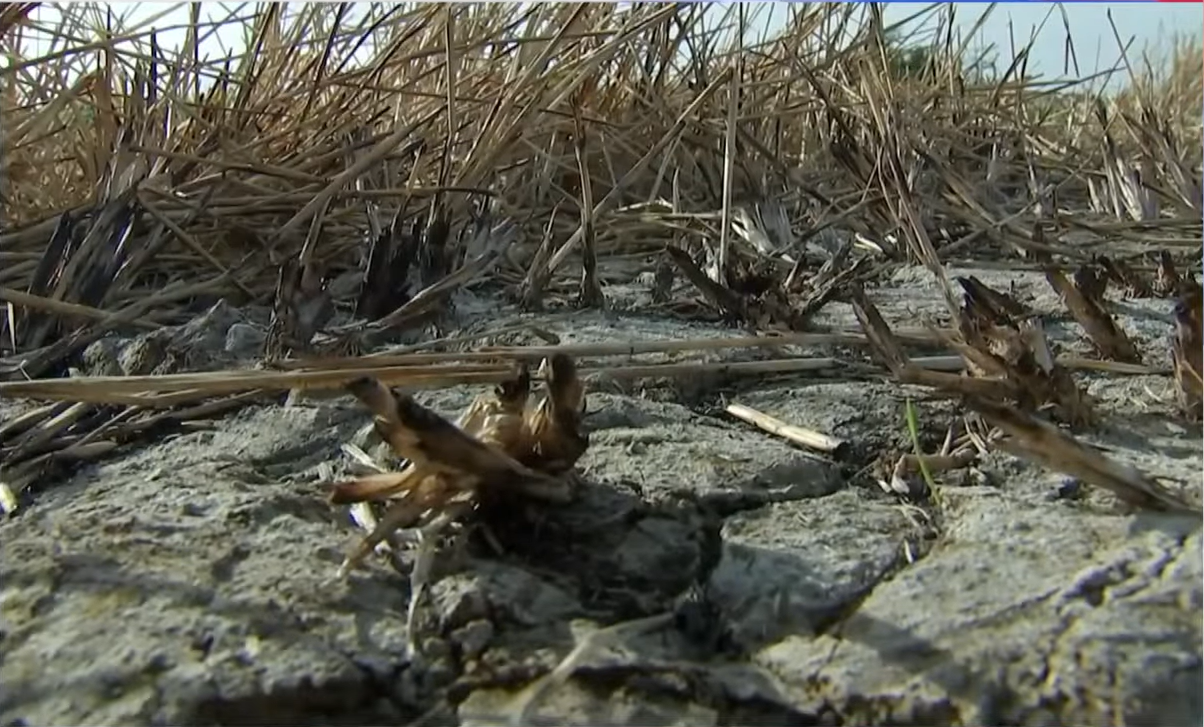
More than P3 billion worth of crops across the country were damaged by moisture stress, according to the Department of Agriculture (DA).
“Wala pang official pronouncement; nasa El Niño watch pa lang ang PAGASA, pero may 15 lugar na nakararanas ng moisture stress at more than P3 billion na ang reported damage, lalo na sa maisan. Karamihan rito ay nandito sa bandang Luzon,” DA spokesperson Arnel de Mesa told Super Radyo dzBB on Sunday.
(There has been no official pronouncement yet; PAGASA is still under an El Niño Watch, but 15 areas are already experiencing moisture stress, and reported agricultural damage is over P3 billion, particularly in corn-producing areas. Most of the affected locations are in the Luzon region.)
According to the state weather bureau PAGASA, moisture stress is a condition in which crops do not receive enough water, usually due to low or delayed rainfall, hindering their normal growth and development.
De Mesa did not specify the 15 areas experiencing moisture stress, but PAGASA said there are 15 areas in Luzon experiencing drought:
- Abra
- Apayao
- Benguet
- Ifugao
- Ilocos Norte
- Ilocos Sur
- Isabela
- Kalinga
- La Union
- Mountain Province
- Nueva Ecija
- Nueva Vizcaya
- Pangasinan
- Quirino
- Tarlac
State meteorologists said a drought occurs when an area experiences significantly below-average rainfall for an extended period.
El Niño preparations
On Thursday, the DA said it is ramping up preparations for a severe El Niño later this year, as a prolonged dry spell could compromise crop production, farmers’ income, and food prices.
To counter these effects, Agriculture Secretary Francisco Tiu Laurel Jr. said the DA has rolled out measures including cloud seeding to boost rainfall, deployment of solar-powered irrigation systems, adjustments to the planting calendar to align with the Northeast Monsoon or Habagat, and crop diversification programs aimed at stabilizing farmers’ earnings.
National Irrigation Administration (NIA) Administrator Eduardo Guillen said farms that cannot be irrigated will shift to crops that require less water, such as corn and mung beans (munggo).
“Mababawasan lang ang production natin ng rice. Pero may chance ang mga farmer natin na magtanim ng high-value crops,” Guillen said in a separate dzBB interview on Sunday.
(Our rice production may decrease, but our farmers will have the opportunity to plant high-value crops.)
He added affected farmers will also be referred to the Department of Social Welfare and Development and the Department of Labor and Employment under their cash-for-work programs to provide them with additional income.
Guillen further said NIA has installed 2,500 units of solar-powered pump irrigation systems across the country since 2023, which can serve between 10 and 100,000 hectares of farmland.
Most of the solar-powered pump irrigation systems are installed in the Ilocos Region, Cagayan Valley, Central Luzon, CALABARZON, MIMAROPA, the Bicol Region, and SOCCSKSARGEN.
DA is projecting that rice production alone could drop by as much as 700,000 metric tons or 3.5% percent of the annual production target if a strong El Niño materializes, signaling serious risks for the nation’s food security and rural incomes.
The state weather bureau has reported a 92% probability of a moderate to strong El Niño striking in the fourth quarter of 2026, potentially extending into early 2027. —RF, GMA Integrated News

